Showing posts with label Indigenous Australians. Show all posts

Tuesday, August 28, 2012

Church and State in the Uniting Church's Statements to the Nation


This post was co-written with Berlin Guerrero as part of a Uniting Church Studies Intensive in which we both participated in July 2012.

What relationship should the Christian church have with the State? The earliest Christians had no formal relationship with the Roman Empire and the church was often persecuted. With the conversion of Constantine in 312CE a process of change was initiated which led eventually to the Church being co-opted by the state and placed at the centre of European society and culture as well as the cultures and peoples that Europeans colonised. It is a very real question whether the church best fulfils its mission by ‘calling the shots’ for the wider society, or whether it functions better as a radical alternative community. There are many examples of how badly the church behaved when it dominated society.  On the other hand, the Church has insights as a prophetic community that need to be heard by the wider society.  How do we find the right balance?   

There is a formal separation of church and state in Australia, in the sense that no religion shall be the test of any political office and any established religion is ruled out. There has been a relatively harmonious relationship between church and state in the sharing of such functions as education and welfare. The Uniting Church in Australia (UCA) has issued two Statements to the Nation (1977 and 1988).  They were deemed significant enough to be included along with the Basis of Union and other formative documents in the 2008 collection, Theology for Pilgrims.[1]  This paper will examine these Statements to see what they reveal of the way the UCA sees itself in relation to the state.


It should be remembered that the Statement to the Nation is not a statement to the government as such but to ‘the nation’ including but not limited to ‘the state.’  It is addressed collectively to ‘the people of Australia.’ Nonetheless it reveals a certain stance toward the ‘powers that be’ that helps us to understand the Uniting Church’s relationship to secular governments.

There is an acknowledgment in paragraph 2 that the Congregationalist, Methodist, and Presbyterian churches had each in its own way ‘contributed in various ways to the life and development’ of the nation.  Furthermore, it is affirmed that ‘a Christian responsibility to society has always been regarded as fundamental to the mission of the Church’ and that the new Uniting Church will see continued involvement in ‘social and national affairs’ as part of its response to the Christian Gospel. In its thirty-five year history the Uniting Church has not been afraid to ‘mix religion with politics or, as Rollie Busch (Moderator of the Queensland Synod in 1977-78) put it, challenge governments with the brilliant insights of the Bible and the radicalism of Calvin, Knox, and Wesley.’[3]

This makes it clear that the Uniting Church does not take a stance of withdrawal from ‘the world,’ such as is found for example in some expressions of the Anabaptist tradition which see the church as an alternative society called to withdraw from the polluting influences of the ungodly. Rather believers are to be ‘citizens of two worlds.’ The fact that the Uniting Church’s first President, J. Davis McCaughey also served as Governor of Victoria indicates that there is no necessary incompatibility between ecclesial and civil loyalties.[4] 

It is clear however, that the Uniting Church does not align itself exclusively with one particular national government, nor with one particular side of politics. Paragraph 3 speaks of the Church’s ‘responsibilities within and beyond this country.’[5] It has particular responsibilities as ‘but one branch of the Christian church within the region of South-East Asia and the Pacific.’ This means that the Church’s witness in the political exigencies of neighbouring nation states is also the concern of the UCA. For example the UCA has recently expressed its deep concern over the military control of the Methodist Church of Fiji and stood in solidarity with its fellow Christians there. 

Paragraph 4 speaks of ‘the need for integrity in public life, the proclamation of truth and justice’ and ‘the rights for each citizen to participate in decision-making in the community.’  Again this shows that the Uniting Church declares itself more than ready to participate in the political process and to bring distinctively Christian insights into public discourse. 

Of great significance for the focus of this paper is the affirmation in paragraph 7 that ‘the first allegiance of Christians is God, under whose judgment the policies and actions of all nations must pass. We realise that sometimes this allegiance may bring us into conflict with the rulers of our day.’ This means that the Uniting Church recognises that its members may at times be called to acts of civil disobedience when Gospel priorities conflict with government policies. Provision for such civil disobedience is explicitly made in the UCA’s present Code of Ethics.[6]

The Uniting Church’s partnership with State and Federal governments in the provision of welfare, health care and education through its various agencies might be seen by some as a ‘cosy one’ that reflects a Constantinian relationship between church and state.  However it is clear in the 1977 Statement to the Nation that this is not the case. The Christian’s first allegiance is to God ‘under whose judgment the policies and actions of all nations must pass.’ This opens up the very real possibility of conflict between the Church and the powers that be. This may be illustrated in the Church voicing concern, for example, at the Federal Government’s treatment of asylum seekers or the current attempt to continue the Intervention into Indigenous communities by enshrining new and potentially destructive legislation.

The Uniting Church describes itself in its 1977 Statement to the Nation not as a state church but as ‘an institution within the nation’ called to ‘stress the universal values which must find expression in national policies if humanity is to survive.’ Its stance therefore is a prophetic one, but prophetic within rather than separated from national life.  There may the need to adjust our perspective even further.  We tend to think of the state as a ‘given’ – something to which the church must respond or in relation to which it must define itself. But what if we were to think of the Reign of God as the ‘given’ reality to which both church and state are called to respond?[7] 
 
President Rev Prof Andrew Dutney and Rev Rronang Garrawurra lead the prayer vigil on the steps of South Australian Parliament, Wednesday 18 July 2012

The second Statement to the Nation was issued eleven years after the first, during the Bicentenary of European settlement (1788-1988). It is not incidental that in such a year there would be a focus on Indigenous Australians (whose presence is recognised as existing ‘40,000 years’ before Europeans) and the need for Reconciliation. Three years prior, another statement, The Uniting Church is a Multi-cultural Church was adopted by the 2005 General Assembly.

Like the 1977 Statement the second is again addressed not to the government alone but ‘to our fellow Australian citizens.’ It expresses thankfulness for ‘those times when the Australian society has established justice, equality, and mutual respect among people;…placed care for the people who have least…welcomed new migrants and refugees; exercised solidarity and friendship …and has engaged constructively with the peoples of Asia, the Pacific and the rest of the world as peacemaker.’[9] It does not describe how ‘society established justice, equality etc.’ but it is of significance that the Uniting Church recognises, if not asserts, that it is the Australian society, not the state by itself, which establishes what is considered valuable and beneficial to the people.

The fourth paragraph needs to be studied critically especially the phrase ‘all of us are beneficiaries of the injustices that have been inflicted…’[10] What are the benefits of injustice to which it refers other than the land and material bounty derived from colonization? It is like saying we benefited from the ‘first sin’ and the ‘fall.’ Should the end justify the means, so to speak? However, for the church to say ‘we all contribute to, and perpetuate those injustices’ is a mark of a confessing church.

Indirectly, the 1988 Statement calls on the state and social institutions such as the educational system, legislature and media to strive for ‘the integrity of our nation’ (mentioned three times) and the requirements and actions necessary to achieve it.

In declaring solidarity with the Aborigines and in cooperation with ‘Australians of goodwill’ the Uniting Church commits itself to the work of justice…etc. and ‘in obedience to God’ to ‘struggle against all systems and attitudes which set person against person, group against group, or nation against nation.’ This commitment is repeated and made even stronger in subsequent paragraphs which pledge to ‘seek to identify and challenge all social and political structures and all human attitudes which perpetuate and compound poverty,’ and ‘seek to identify and challenge all structures and attitudes which perpetuate and compound the destruction of creation.’ 

The UCA Statements to the nation reflect the church’s view and attitude towards the nation and the world, present the various issues and concerns of the nation and the world, and affirm obedience to God.  They do not address any particular government administration either in the past or in power at the time the Statements were adopted.

The UCA has strong commitment to the plight of the poor, Indigenous peoples, victims of injustices, refugees, etc. and on the basis of this commitment recognises that at times it can be in conflict with the state’s policies. The Constantinian ‘marriage’ between church and state is no longer in effect in Australia, though on the whole, the UCA’s relationship with the state can be said to be one of ‘critical collaboration.’ The church must always remain aware, however, that its loyalty is first to Christ, and that this loyalty must always take precedence over state-like institutions or worldly authority.


[1] Robert Bos and Geoff Thompson, Theology for Pilgrims: Selected Theological Documents of the Uniting Church in Australia (Sydney: Uniting Church Press, 2008.)
[3] William Emilsen and Susan Emilsen, The Uniting Church in Australia: The First 25 Years  (Melbourne: Circa, 2003), p. 2.
[4] For a collection of J. Davis McCaughey’s writings see Peter Matheson and Christiaan Mostert, eds. Fresh Words and Deeds: The McCaughey Papers (Melbourne: David Lovell, 2004). See also J. Davis McCaughey, Commentary on the Basis of Union of the Uniting Church in Australia (Melbourne: Uniting Church Press, 1980).
[5] Emphasis ours.
[6] According to Paragraph 6.2 of The Uniting Church in Australia Code of Ethics and Ministry Practice for Ministers in the Uniting Church in Australia (Whether in Approved Placements or Not) Approved by the 12th Assembly July 2009, ‘It is unethical for Ministers deliberately to break the law or encourage another to do so.  The only exception would be in instances of political resistance or civil disobedience.’  
[7] We are indebted to Randall Prior for this insight given during feedback on our class presentation. 
[9] Italics ours.
[10] Italics ours.

Friday, September 11, 2009

Homelands Delegation in Canberra


I was very glad to be able to offer a small amount of financial support for a delegation of Indigenous people from East Arnhem Land to travel to Canberra to put their case to the Federal Government. The Northern Territory government plans to restrict its funding to a small number of urban population centres thus requiring the people who live in their traditional Homelands to travel out of country to access services.

The delegation met with Indigenous Affairs Minister Jenny Macklin;Minister for Indigenous Health, Rural and Regional Health & Regional Services Delivery, Warren Snowdon; Senator Mark Arbib; and advisors to the Deputy Prime Minister Julia Gillard.

This short video shows some of the delegates expressing their thoughts on the meeting. I pray that the concerns of this delegation will not fall on deaf ears, and that the federal government will put pressure on the NT government to ensure a fair deal for the people in the Homelands. You can learn more about the Homelands by watching the following video.


Thursday, February 14, 2008

The Apology

Kevin Rudd in Darwin during the election campaign (AAP: Alan Porritt)


Yesterday the Prime Minister, Kevin Rudd, made history with the following speech. I'm sure you've already heard it and read it, probably more than once, but I wanted to post it here because many of my international vistors (hopefully some of my Australian History students from Houghton Down Under, may not have got it elsewhere. Mungo Macallum has complained that it should have been written by a poet, but he is one, so he would say that. OK so it may have been written by a parliamentary team of speech writers but it is historic, and it is just, and it is a solid foundation for a shared future.

"Today we honour the Indigenous peoples of this land, the oldest continuing cultures in human history.

We reflect on their past mistreatment.

We reflect in particular on the mistreatment of those who were Stolen Generations – this blemished chapter in our nation’s history.

The time has now come for the nation to turn a new page in Australia’s history by righting the wrongs of the past and so moving forward with confidence to the future.

We apologise for the laws and policies of successive Parliaments and governments that have inflicted profound grief, suffering and loss on these our fellow Australians.

We apologise especially for the removal of Aboriginal and Torres Strait Islander children from their families, their communities and their country.

For the pain, suffering and hurt of these Stolen Generations, their descendants and for their families left behind, we say sorry.

To the mothers and the fathers, the brothers and the sisters, for the breaking up of families and communities, we say sorry.

And for the indignity and degradation thus inflicted on a proud people and a proud culture, we say sorry.

We the Parliament of Australia respectfully request that this apology be received in the spirit in which it is offered as part of the healing of the nation.

For the future we take heart; resolving that this new page in the history of our great continent can now be written.

We today take this first step by acknowledging the past and laying claim to a future that embraces all Australians.

A future where this Parliament resolves that the injustices of the past must never, never happen again.

A future where we harness the determination of all Australians, Indigenous and non-Indigenous, to close the gap that lies between us in life expectancy, educational achievement and economic opportunity.

A future where we embrace the possibility of new solutions to enduring problems where old approaches have failed.

A future based on mutual respect, mutual resolve and mutual responsibility.

A future where all Australians, whatever their origins, are truly equal partners, with equal opportunities and with an equal stake in shaping the next chapter in the history of this great country, Australia."

Wednesday, August 23, 2006

The History Wars

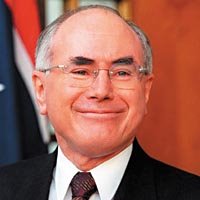
The Prime Minister has recently called for a renewal of history teaching in Australian secondary schools, with the suggestion of making history a compulsory subject in all schools. Mr. Howard is concerned about how we are to preserve, in an increasingly pluralistic society, a sense of Australian national identity, without an overarching and coherent narrative. “I do not believe,” he said, “that you can have any sensible understanding and, therefore, any sensible debate about different opinions of Australian history unless you have some narrative and method in the comprehension and understanding of history. How you can teach issues and study moods and fashions in history, rather than comprehend and teach the narrative, has always escaped me.” (“Summit divides over compulsory history,” The Age 17.08.06)

Just last week a summit of historians, politicians, and educators met in Canberra to discuss the Prime Minister’s proposal. This seems like a welcome trend but there are some who are concerned about the possible “politicization” of history that may result from such an approach. If Australia is to have an “official” history, if the Prime Minister is to appoint the historians who write the curriculum, if government funding is to be directed to some projects and not others, then whose version of history will be sanctioned? Already the opposition Labor Party is concerned that the government wants to rewrite history to reflect its own conservative world-view. Opposition education spokeswoman Jenny Macklin said in The Age “The teaching of history is very important in our schools but the last thing we want is John Howard pushing his ideology down the throats of our children.”

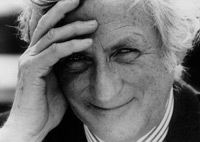
Is this just the opening round in the next campaign of the “history wars”? Debates about the nature of the past are hugely significant in shaping the identity of any people and in charting a way forward into the future. The heart of the argument can be traced back to a phrase coined by Geoffrey Blainey (left) in his Latham Lecture of 1993 and then subsequently picked up by John Howard when he won government in March 1996. Blainey referred to the pessimistic view of Australian history as “black-armband history.” Earlier generations had held a very positive “three cheers for the British and their great accomplishments” kind of history. This at least was the history I was taught at school. There was lots of flag raising, and military uniforms, with the Aborigines somewhere in the background looking on from behind trees, waiting to perform cultural ceremonies to the delight of their newly arrived guests. No blood was spilt (or very little) in the history I learned at school. Words like “genocide” or “massacre” were never used. Blainey held that in reaction to this overly rosy view the pendulum had swung too far the other way and on overly pessimistic view had emerged resulting in an equal but opposite historical jaundice. (It should be noted that black armbands were used in the Aboriginal protest movement in the 1970s, before Blainey coined the term, as a symbol of Aboriginal dispossession.)


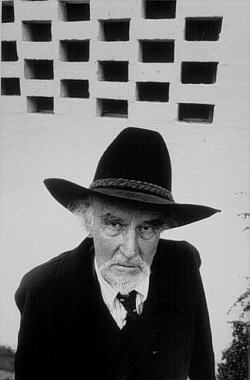
The person most responsible for this “black armband view” of Australian History, according to Blainey, was Manning Clark (above), the man usually seen as the founder of the approach to Australian History as Australian, rather than as an episode in British history. Blainey maintained that a “guilt industry” had emerged from Clark’s work outsides of the historical profession – in the ABC, in the Australian Labor Party, in educational institutions, and in the High Court. Too much emphasis was being placed, it was said, on the dispossession of the Aborigines, and on the destructive impact on the environment of European civilization. White Australians were racist, sexist, militarist, and exploitative and they needed to make reparations. John Howard, picking up on Blainey’s criticisms came into office in 1996 asserting that “the balance sheet of Australian history is a generous and benign one.” This appealed to an Australian sense of patriotism and national pride and no doubt contributed to a Liberal victory. [Mark McKenna, “Black-armband history,” in Graeme Davison, John Hirst, and Stuart Macintyre, eds. The Oxford Companion to Australian History (Melbourne: Oxford University Press, 2001), 73.]

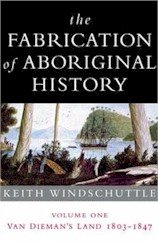
More recently controversy has broken out over the nature of the dispossession of the Aborigines in Tasmania. In 2002 Keith Windschuttle’s The Fabrication of Aboriginal History made the claim that the “genocide” of Tasmanian Aborigines was a myth and that there had been no widespread massacres of Aboriginal people during the period of white settlement there. He argued that the Aborigines had no sense of ownership of land; such an idea was not part of their mental universe so they could not be said to have had their land stolen from them. The land was “terra nullius” – an empty land, belonging to no one and so legitimately appropriated by the British crown.

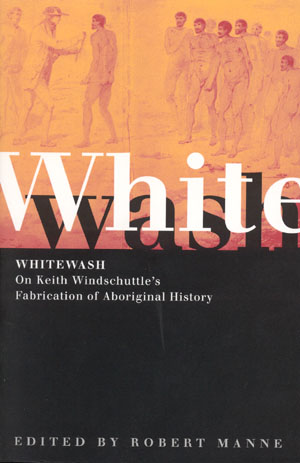
Windschuttle’s book created a storm of controversy and seasoned historians of Aboriginal and settler relations on the frontier, such as Henry Reynolds, clashed head on with Windschuttle’s hypothesis, as well as with his historical method and accuracy. Winschuttle became something of a cause celebre among right wing conservatives and The Australian ran a series of pro- and anti-Windschuttle pieces that kept the debate in the national consciousness for quite a while. For its own part The Australian tended to editorialize in favour of Windschuttle and he became something of a figurehead for those who opposed the “black-armband” approach to history. Professor Robert Manne, one of Australia’s leading public intellectuals, has lamented the way that “so many prominent Australian conservatives have been so easily misled by so ignorant, so polemical and so pitiless a book.” [Robert Manne, ed. Whitewash: On Keith Windschuttle’s Fabrication of Aboriginal History (Melbourne: Black Inc. Agenda, 2003), 11.


The latest move from the Prime Minister continues to stir the pot on our national history. So here we are in Australian in 2006 certain that history matters, and that the generally understood narrative of a nation does indeed affect national identity, politics, education, and a good deal more.

[If you liked this post you might also enjoy reading the following previous posts - Trying to Speak Good Christian in Canberra, Bring the Troops Home, "Wiping Out" the Aborigines, The Proposition and Race Riots in Cronulla.]

Wednesday, December 14, 2005

"Wiping Out" the Aborigines

In replying to my comments on the Cronulla Race Riots a friend said. "If you think the P.M. is not as aware as you are, and probably much more so, well!!!" I didn't mean to say that the PM's comments were naive or that I was more aware than he (though I admit my comment may have sounded that way). My concern is that he can't just come right out and say that the violence in Cronulla has underlying racism beneath it. Why can't he just name 'the "r" word.' The police commissioner has done so, why can't the PM? The only way to healing in our communities is to start to speak the truth without doublespeak or spin. When "white Australians" (for what of a better term) are wearing swastikas, draping themselves in the Australian and/or Eureka flags, chanting ""Today is ethnic cleansing day," "Death to Lebs!" and "F**k Allah," I think it's safe to say that racism may be behind it - why can't the PM call it that and then work toward healing?

(Here's another flag draper - Pauline Hanson).

My friend also took exception to my reference to the brutal history of white and black relations in this country, by stating that "While there were massacres on both sides with the present people and the European 'invaders,' at least there was no plan to wipe them out." In one sense there WAS a plan to "wipe out" the Aborigines and that was the government policy of removing "half-castes" from their family groups and resettling them in white families with the hope that they would be integrated into white society, marry Europeans, have children and eventually have their aboriginality "bred out." The prohibition on speaking their own language often encountered in missions, schools, and foster families was also a powerful method of "wiping out" their aboriginality.

At first the colonial government had a quite enlightened policy toward the Aborigines. Governor Phillip was under strict orders from the crown to deal justly with the Aborigines and not to take possession of any land without consent. Phillip was quite a just man in this respect. There was an early idyllic period when black and white Australians were given an opportunity to co-exist harmoniously. However, pastoralism put an end to all that, because to have sheep, cattle, and crops you need land, and if the country was going to fulfil its manifest destiny to grow and prosper it was going to need land. The Aborigines were in the way and when they defended their country they were killed by a civilization with much greater firepower. Social Darwinist ideas soon began to affect white attitudes. The Aborigines are lower on the evolutionary scale than the whites. They are doomed to extinction. The stronger race is destined to supplant the weaker and so on. It was thought to be only a matter of time until the Aborigines died out and then all the land would be ours anyway. The problem was that Aboriginal women were bearing the children of white men (sometimes as a result of rape, sometimes through consenting relationships and even marriage). The "full blooded" population had diminished considerably by the late nineteenth century but the "half-caste" population was on the rise. So a new policy was devised - assimilation. This was a policy that was designed to Europeanise the "half-castes" and leave the few "full bloods" that were still living in the traditional ways alone in the far reaches of the outback where they couldn't get in the way of the nation's destined prosperity and growth. Even then, Menzies allowed the British government to test nuclear bombs at Maralinga, without telling any of us until it had already happened!

Since the 1970s when Aborigines began to get a little more organised and militant about their cultural identity and rights, we have had to learn to face this ugly past. It seems to me that the history books that "don't tell it like it is" are the ones we read when we were at school,in which the settlement of this country was a very heroic and rather polite affair of nice men in red uniforms raising union jacks on beaches while quaint looking blackfellas looked on from the background in polite admiration. All blood was expunged from the record. We need to redress this imbalance in our public discourse.

For sane and well balanced histories that are sympathetic to both Aborigine and Settler, you cannot do better than Richard Broome's Aboriginal Australians and his more recent Aboriginal Victorians.

Tuesday, December 13, 2005

Race Riots in Cronulla

Well I finally worked out how to upload images to my blog. So here's me looking very serious in my office. (Actually it's my old office from a year ago - oh well.) More racial violence in Cronulla overnight and the Prime Minister will no doubt repeat his mantra that "Australians are not a racist people." Well, I guess it's all relative, and maybe we aren't as racist as some. But the measure of our national spirit should not be that of other countries. If we compare ourselves with more patently racist socities we might be tempted to pat ourselves on the back, but if we measure ourselves against the principles of the Reign of God, we would hang our heads in shame. Australia has a long history of racist attitudes. Have we forgotten that the White Australia policy, established by law at Federation and only dismantled in 1966, explicitly discrimated against all but British-born and British-looking immigrants? What about Chinese miners being beaten to within an inch of their lives at Lambing Flat in 1861 (just one instance of such Gold Rush xenophobia)? Not to mention (actually, no, we should mention) our brutal past regarding the Indigenous people of this country. Lord have mercy. Christ have mercy.

Saturday, December 10, 2005

The Proposition

I wrote the following film review back in October for Peter Breen of Urban Eyes and Cafe Jugglers for posting on his "Out of This World and Into It" email letter. I hope he won't mind me republishing it here.

Not a film for the fainthearted, The Proposition (Directed by John Hillcoat; Written by Nick Cave) peels back the layers of revisionist history and gives us an unsettling look at the brutality of nineteenth century Australia. A self-styled "Australian Western," this is essentially a bushranger film, set in the 1880s, but these madmen make Heath Ledger's Ned Kelly look like a pansy! There isn't a bad performance here, and Nick Cave's music is suitably haunting. Guy Pearce (pictured left) is Charlie Burns the bushranger tracking down his homicidal rapist brother Arthur (Danny Huston). Charlie has accepted a proposition from the local policeman, Captain Stanley (Ray Winstone) - if he kills his older brother he and his younger brother can escape the gallows. Eventually he finds his brother and "will he or won't he kill him?" is the question that keeps the audience going. Stanley and his wife (Emma Watson) seek desperately to "civilize" this savage country. They want to replicate England as best they can, steadfastly refusing to come to terms with, or seek to understand, the hostile wilderness that surrounds their little island of a frontier town. The visual cues to this are fascinating to watch for. Mrs. Stanley has roses, that most English of plants, growing in her front yard. The fence around their homestead is a white picket fence (though the cross bars are rough-hewn Australian gum, an interesting juxtaposition of old and new world materials). A portrait of the Queen dominates their dining room. They open a box of Christmas decorations including white cotton "snow" and they sit down on Christmas Day to carve a hot roast dinner, though it's probably 100 degrees in the shade outside. During this Christmas meal they are brutalised by Arthur, the mad Irish bushranger, who wraps his victim's bashed and bleeding head in the union jack. Here in this climactic (and difficult to watch) scene, Charlie must make his decision - does he intervene and take his brother out or will family ties prove too strong?

Indigenous people fare quite well in this film. There are certainly depictions of subjugation, humiliation, brutality and race hatred ("What is an Irishman?" asks deranged bounty hunter Jellon Lamb [John Hurt] but a nigger turned inside out?") But at the same time, the Aborigines are a force to be reckoned with. Somewhat like a John Ford westerm where the Indians are almost a force of nature inhabiting the landscape like the the rocks and the desert sands of Monument Valley, the Aboriginal people of this film are a constant threat to those who dare to walk into their country (beautifully shot by the way). They are skilled warriors, they are dangerous, they know the territory in a way that white people could never hope to know it, and if you wander onto their turf, you might at any time find yourself fatally speared when you least expect it. Giving the Indigenous people the upper hand in their own country works well in establishing their dignity and self-reliance. Two other scenes work in a similar way. One of Arthur Burns' gang members is an Aboriginal man, and when a racist policeman falls into his trap while looking for his Aboriginal tracker (played by David Gulpilil - again!) he is told "You've got the wrong f***in' blackfella!" In a strange way you find yourself wanting to cheer for this guy - even though the life of a bushranger is hardly admirable, at least it's self-determining! More subtly, but just as powerfully, when Captain Stanley lets his Aboriginal domestic servant go, before walking through the gate, presumably to return to his own country, he removes his shoes (symbol of the white man's repression), places them carefully in the dirt and then walks out barefoot. It's for reasons like these (and many others) that the extreme violence of this film can be forgiven. I would rather not watch graphic violence and am as uncomfortable with it as most people. But if it's a choice between the sanitised history I learned in school and the horror story that was Australia's actual colonial past, bring on the gore. I don't mind being shocked by violence and racism if it leads to outrage over them and concerted action against them. This is the effect the film ought to have on thoughtful viewers. It doesn't glorify bloodshed, but it has the potential to bring something redemptive out of it.

AddThis

Share |