Showing posts with label Justice. Show all posts

Tuesday, August 28, 2012

Church and State in the Uniting Church's Statements to the Nation


This post was co-written with Berlin Guerrero as part of a Uniting Church Studies Intensive in which we both participated in July 2012.

What relationship should the Christian church have with the State? The earliest Christians had no formal relationship with the Roman Empire and the church was often persecuted. With the conversion of Constantine in 312CE a process of change was initiated which led eventually to the Church being co-opted by the state and placed at the centre of European society and culture as well as the cultures and peoples that Europeans colonised. It is a very real question whether the church best fulfils its mission by ‘calling the shots’ for the wider society, or whether it functions better as a radical alternative community. There are many examples of how badly the church behaved when it dominated society.  On the other hand, the Church has insights as a prophetic community that need to be heard by the wider society.  How do we find the right balance?   

There is a formal separation of church and state in Australia, in the sense that no religion shall be the test of any political office and any established religion is ruled out. There has been a relatively harmonious relationship between church and state in the sharing of such functions as education and welfare. The Uniting Church in Australia (UCA) has issued two Statements to the Nation (1977 and 1988).  They were deemed significant enough to be included along with the Basis of Union and other formative documents in the 2008 collection, Theology for Pilgrims.[1]  This paper will examine these Statements to see what they reveal of the way the UCA sees itself in relation to the state.


It should be remembered that the Statement to the Nation is not a statement to the government as such but to ‘the nation’ including but not limited to ‘the state.’  It is addressed collectively to ‘the people of Australia.’ Nonetheless it reveals a certain stance toward the ‘powers that be’ that helps us to understand the Uniting Church’s relationship to secular governments.

There is an acknowledgment in paragraph 2 that the Congregationalist, Methodist, and Presbyterian churches had each in its own way ‘contributed in various ways to the life and development’ of the nation.  Furthermore, it is affirmed that ‘a Christian responsibility to society has always been regarded as fundamental to the mission of the Church’ and that the new Uniting Church will see continued involvement in ‘social and national affairs’ as part of its response to the Christian Gospel. In its thirty-five year history the Uniting Church has not been afraid to ‘mix religion with politics or, as Rollie Busch (Moderator of the Queensland Synod in 1977-78) put it, challenge governments with the brilliant insights of the Bible and the radicalism of Calvin, Knox, and Wesley.’[3]

This makes it clear that the Uniting Church does not take a stance of withdrawal from ‘the world,’ such as is found for example in some expressions of the Anabaptist tradition which see the church as an alternative society called to withdraw from the polluting influences of the ungodly. Rather believers are to be ‘citizens of two worlds.’ The fact that the Uniting Church’s first President, J. Davis McCaughey also served as Governor of Victoria indicates that there is no necessary incompatibility between ecclesial and civil loyalties.[4] 

It is clear however, that the Uniting Church does not align itself exclusively with one particular national government, nor with one particular side of politics. Paragraph 3 speaks of the Church’s ‘responsibilities within and beyond this country.’[5] It has particular responsibilities as ‘but one branch of the Christian church within the region of South-East Asia and the Pacific.’ This means that the Church’s witness in the political exigencies of neighbouring nation states is also the concern of the UCA. For example the UCA has recently expressed its deep concern over the military control of the Methodist Church of Fiji and stood in solidarity with its fellow Christians there. 

Paragraph 4 speaks of ‘the need for integrity in public life, the proclamation of truth and justice’ and ‘the rights for each citizen to participate in decision-making in the community.’  Again this shows that the Uniting Church declares itself more than ready to participate in the political process and to bring distinctively Christian insights into public discourse. 

Of great significance for the focus of this paper is the affirmation in paragraph 7 that ‘the first allegiance of Christians is God, under whose judgment the policies and actions of all nations must pass. We realise that sometimes this allegiance may bring us into conflict with the rulers of our day.’ This means that the Uniting Church recognises that its members may at times be called to acts of civil disobedience when Gospel priorities conflict with government policies. Provision for such civil disobedience is explicitly made in the UCA’s present Code of Ethics.[6]

The Uniting Church’s partnership with State and Federal governments in the provision of welfare, health care and education through its various agencies might be seen by some as a ‘cosy one’ that reflects a Constantinian relationship between church and state.  However it is clear in the 1977 Statement to the Nation that this is not the case. The Christian’s first allegiance is to God ‘under whose judgment the policies and actions of all nations must pass.’ This opens up the very real possibility of conflict between the Church and the powers that be. This may be illustrated in the Church voicing concern, for example, at the Federal Government’s treatment of asylum seekers or the current attempt to continue the Intervention into Indigenous communities by enshrining new and potentially destructive legislation.

The Uniting Church describes itself in its 1977 Statement to the Nation not as a state church but as ‘an institution within the nation’ called to ‘stress the universal values which must find expression in national policies if humanity is to survive.’ Its stance therefore is a prophetic one, but prophetic within rather than separated from national life.  There may the need to adjust our perspective even further.  We tend to think of the state as a ‘given’ – something to which the church must respond or in relation to which it must define itself. But what if we were to think of the Reign of God as the ‘given’ reality to which both church and state are called to respond?[7] 
 
President Rev Prof Andrew Dutney and Rev Rronang Garrawurra lead the prayer vigil on the steps of South Australian Parliament, Wednesday 18 July 2012

The second Statement to the Nation was issued eleven years after the first, during the Bicentenary of European settlement (1788-1988). It is not incidental that in such a year there would be a focus on Indigenous Australians (whose presence is recognised as existing ‘40,000 years’ before Europeans) and the need for Reconciliation. Three years prior, another statement, The Uniting Church is a Multi-cultural Church was adopted by the 2005 General Assembly.

Like the 1977 Statement the second is again addressed not to the government alone but ‘to our fellow Australian citizens.’ It expresses thankfulness for ‘those times when the Australian society has established justice, equality, and mutual respect among people;…placed care for the people who have least…welcomed new migrants and refugees; exercised solidarity and friendship …and has engaged constructively with the peoples of Asia, the Pacific and the rest of the world as peacemaker.’[9] It does not describe how ‘society established justice, equality etc.’ but it is of significance that the Uniting Church recognises, if not asserts, that it is the Australian society, not the state by itself, which establishes what is considered valuable and beneficial to the people.

The fourth paragraph needs to be studied critically especially the phrase ‘all of us are beneficiaries of the injustices that have been inflicted…’[10] What are the benefits of injustice to which it refers other than the land and material bounty derived from colonization? It is like saying we benefited from the ‘first sin’ and the ‘fall.’ Should the end justify the means, so to speak? However, for the church to say ‘we all contribute to, and perpetuate those injustices’ is a mark of a confessing church.

Indirectly, the 1988 Statement calls on the state and social institutions such as the educational system, legislature and media to strive for ‘the integrity of our nation’ (mentioned three times) and the requirements and actions necessary to achieve it.

In declaring solidarity with the Aborigines and in cooperation with ‘Australians of goodwill’ the Uniting Church commits itself to the work of justice…etc. and ‘in obedience to God’ to ‘struggle against all systems and attitudes which set person against person, group against group, or nation against nation.’ This commitment is repeated and made even stronger in subsequent paragraphs which pledge to ‘seek to identify and challenge all social and political structures and all human attitudes which perpetuate and compound poverty,’ and ‘seek to identify and challenge all structures and attitudes which perpetuate and compound the destruction of creation.’ 

The UCA Statements to the nation reflect the church’s view and attitude towards the nation and the world, present the various issues and concerns of the nation and the world, and affirm obedience to God.  They do not address any particular government administration either in the past or in power at the time the Statements were adopted.

The UCA has strong commitment to the plight of the poor, Indigenous peoples, victims of injustices, refugees, etc. and on the basis of this commitment recognises that at times it can be in conflict with the state’s policies. The Constantinian ‘marriage’ between church and state is no longer in effect in Australia, though on the whole, the UCA’s relationship with the state can be said to be one of ‘critical collaboration.’ The church must always remain aware, however, that its loyalty is first to Christ, and that this loyalty must always take precedence over state-like institutions or worldly authority.


[1] Robert Bos and Geoff Thompson, Theology for Pilgrims: Selected Theological Documents of the Uniting Church in Australia (Sydney: Uniting Church Press, 2008.)
[3] William Emilsen and Susan Emilsen, The Uniting Church in Australia: The First 25 Years  (Melbourne: Circa, 2003), p. 2.
[4] For a collection of J. Davis McCaughey’s writings see Peter Matheson and Christiaan Mostert, eds. Fresh Words and Deeds: The McCaughey Papers (Melbourne: David Lovell, 2004). See also J. Davis McCaughey, Commentary on the Basis of Union of the Uniting Church in Australia (Melbourne: Uniting Church Press, 1980).
[5] Emphasis ours.
[6] According to Paragraph 6.2 of The Uniting Church in Australia Code of Ethics and Ministry Practice for Ministers in the Uniting Church in Australia (Whether in Approved Placements or Not) Approved by the 12th Assembly July 2009, ‘It is unethical for Ministers deliberately to break the law or encourage another to do so.  The only exception would be in instances of political resistance or civil disobedience.’  
[7] We are indebted to Randall Prior for this insight given during feedback on our class presentation. 
[9] Italics ours.
[10] Italics ours.

Monday, September 03, 2007

The Jammed

Last Wednesday night I attended a charity screening for Project Respect of The Jammed, an Australian film, written, produced and directed by Dee McLachlan, about the trafficking of girls for use in illegal prostitution. It's a confronting film that reveals the ugly side of Melbourne and is a reminder that it is often upper middle class people who benefit from this evil trade. It makes you wonder how many more boutiques and galleries run by chardonay sipping socialites are built on the back of such exploitation and cruelty. It is certainly a film that makes you feel ashamed to be a part of that 49% of the human population that exploits members of the other 51% with such heartlessness. You can visit the film's website here. I heard about this screening through the Stop the Traffic campaign, a movement to put an end to the buying and selling of people for profit. Project Respect is an advocay group that work to protect women in the sex industry from violence and exploitation. You can read The Age review of the film here. Unfortunately, due to a technicality the film is not eligible for an AFI award which is a real tragedy because it is certainly deserving. If you've seen the film, and you think it has value, I encourage you to vote for it in the IF awards instead.

Reblog this post [with Zemanta]

Wednesday, August 08, 2007

Teenage Affluenza

Ellen and Jasmine will be doing the 40 Hour Famine in a couple of weeks. Please watch this video and consider sponsoring them or another person you know who is participating, or even doing it yourself.

Wednesday, July 11, 2007

Tuesday, August 15, 2006

Darfur Genocide


I am posting these eloquent words from one of my students, Megan Orrin, echoing her concerns and joining with those voices who are asking the media to give urgent attention to this crisis. I have forwarded this letter, as an expression of shared concerns to various media outlets and encourage any of the visitors to my blog to do the same. You can find out more here and here.

"Right now a campaign of rape, slaughter and displacement is currently being carried out in the western region of Sudan, the largest country in Africa. Government-supported troops have displaced 2.5 million people in the past two years, hundreds of thousands have died due to attacks, disease and starvation, and it is estimated that 500 men, women and children continue to die every day.

We must put pressure on our national leaders to take immediate action. President Bush and the United States Congress have recognized the situation in Darfur as "genocide," but it will take much more than words to end the violence and suffering in Darfur. In fact this recognition imposes a legal obligation, let alone the inherent moral obligation, upon governments to take action to stop the genocide. If our leaders made Darfur a priority, hundreds of thousands of lives could be saved.

We don't do anything because we don't know anything. I am writing to you to beg you to look into this situation. We need media coverage to educate our citizens about this situation. We need to care and get our goverment to see that we care so that action can be taken to help these people escape their situation.

This is what Wikipedia has to say about the Darfur conflict:
The Darfur conflict is an ongoing conflict in the Darfur region of western Sudan, mainly between the Janjaweed, a militia group recruited from local Baggara tribes, and the non-Baggara peoples (mostly tribes of small farmers) of the region. The Sudanese government, while publicly denying that it supported the Janjaweed, provided arms and assistance and has participated in joint attacks with the group. The conflict began in February 2003. Estimates of deaths in the conflict have ranged from 50,000 (World Health Organization, September 2004) to 450,000 (Dr. Eric Reeves, 28 April 2006). Most NGOs use 400,000, a figure from the Coalition for International Justice. The conflict has been described by mass media as "ethnic cleansing" and "genocide"; the Bush Administration of the United States and the U.S. Congress have declared it to be genocide, though the United Nations has declined to do so.

President Bush once wrote in the margins of a report on the Rwandan genocide, "Not on my watch.", yet it is happening again! Last time we just sat back and watched, let's not to it again! Please help me in calling for immediate attention to Darfur and more robust action on behalf of governments to support security efforts in the region. Please help get this message out!"

Some media you can alert:

onlinenewsproducers@seven.com.au

melbnews@seven.com.au,

todayshow@nine.com.au

today@nine.com.au

60minutes@nine.com.au

Wednesday, August 09, 2006

Trying to Speak Good Christian in Canberra

I attended the National Forum on Australia's Christian Heritage at Parliament House, Canberra on Monday and Tuesday. I was hoping it would not be a flag waving "let's take the nation for Jesus!" type of exercise and I'm glad to say it wasn't. Stuart Piggin, the principal organiser, made a helpful distinction between Australia as a "Christian nation" which it certainly is not, and Australia as a "Christianised" nation, which is just as certainly is. There was a wide cross section of views represented, with speakers and delegates drawn from across the denominational and theological spectrum and politicians from both the left and the right. Kevin Rudd, Labor Shadow Minister for Foreign Affairs spoke about the Christian origins of the Australian Labor Party and spoke eloquently of the need for Christians to play their part in a pluralist society. The event confirmed my suspicions that recent concerns about an American-style take over by the "Religious Right" in Australia are often superficial and not suitably nuanced about the nature of "Christian Australia." (Michael Ashby's review of Dennis Altman's essayThe 51st State in the latest Eureka Street is worth a look). The fact is that Christian Australia is not exclusivley "right wing" nor even exclusively "evangelical." Though there were occasional cringe-worthy moments - such as when the photographer Ken Duncan criticised Aboriginal land rights as creating an apartheid system (!)- most speakers were moderate voices from a broad range of Christian traditions calling for the importance of celebrating and remembering Australia's Christian past and present.

Public discourse is an interesting thing to observe and learning how to speak "Christianly" in public is a skill in all too short supply. Robert Jenson says that “theology is the thinking internal to the task of speaking the Gospel" (Systematic Theology I:5), which is another way of saying we should think before we speak. Theology is always an act of interpretation because it hears the old word of the Gospel and it speaks that word afresh in a new context. We have heard the Gospel spoken to us; we must now ask what we should say and do so that the Gospel may be spoken again. The logical form of theology includes such statements as “To be speaking the Gospel say x rather than y.” Paul says “To be saying the Gospel say “Jesus is Lord” rather than “Jesus is cursed.” The church exerts her teaching authority when she says, “If you claim to speak for this community say ‘the eternal Son of God was made flesh in Jesus Christ,’ rather than ‘Jesus was only a Galilean peasant rabbi.’” It is the church’s dogmatic task to determine which statements about God speak the Gospel and which do not. The church is that community “which speaks Christianese” and a sentence like “Jesus is Lord” is a properly made sentence according to the grammar of orthodoxy. “God helps those who help themselves” is not very good Christian. "I can do nothing without God’s help” is better. Dogmatic (as distinct from doctrinal) statements emerge once the church has said “To be speaking the Gospel we must henceforth say ‘x’ rather than that other possibility ‘y’,” there can be no going back. Such a dogmatic choice irrevocably determines the future of the church. I remember Jim Ridgway when I took Systematic Theology as an undergraduate student saying, “You can say you don’t believe in the Trinity if you want to, so long as you realise that when you say that you place yourself outside of the church.”

During the Forum, Bronwyn Bishop, Federal Member for Mackellar, was responding to a paper given by Professor Robert Linder, who had given an address in which he had referred to an early Australian Trade Union leader as a Christian Socialist. This was too much for Ms. Bishop who insisted in her reply that there was no such thing as Christian Socialism. A socialist could be a Christian but the word “socialist” could never be used as an adjective to modify the noun “Christian.” The reason she gave for this was that the focus on Christianity is on the needs of the individual rather than on the needs of the group. Now this seemed to me and to many others not to be speaking very good Christian at all. She had also confidently asserted, in challenging religious pluralism, “My Bible says that Jesus said ‘I am the Way the Truth and the Light.’” [rather than the “Life.”) Another speaker had urged us never to forget “Sampson and his donkey” (!) These are forgivable errors. They are either slips of the tongue or minor misquotes. But to understand Christianity as entirely about the needs of individuals and to have therefore little to say about social needs or collective concerns seems to me to be speaking very bad Christian indeed. At least one other delegate must have felt the same as he called out “The Honourable Member’s time has elapsed!” This was the only genuinely discourteous, even if perceptive, moment at the forum.

Parliament resumed the day after the Forum and Mr. Howard now finds himself embattled with even his own coalition back benchers who have rejected his proposed "Migration Amendment (Designated Unauthorised Arrivals) Bill" as draconian and regressive and seem likely to vote against the Bill with the Opposition. It seeks to amend the Migration Act of 1958 by expanding the offshore processing regime so that all unauthorised arrivals, including mainland arrivals, are processed offshore in detention centres. This will inevitably mean children in jails in Nauru. Do we really want to be doing that? Liberal MP Petro Georgiou in The Age today called it "the most profoundly disturbing piece of legislation I have encountered since becoming a member of parliament." To privilege border protection over the Christian grace of hospitality seems patently wrong to me. We cannot say to refugees, "You are not welcome here and if you come here we will jail you and your children" and be speaking good Christian.

Wednesday, December 14, 2005

"Wiping Out" the Aborigines

In replying to my comments on the Cronulla Race Riots a friend said. "If you think the P.M. is not as aware as you are, and probably much more so, well!!!" I didn't mean to say that the PM's comments were naive or that I was more aware than he (though I admit my comment may have sounded that way). My concern is that he can't just come right out and say that the violence in Cronulla has underlying racism beneath it. Why can't he just name 'the "r" word.' The police commissioner has done so, why can't the PM? The only way to healing in our communities is to start to speak the truth without doublespeak or spin. When "white Australians" (for what of a better term) are wearing swastikas, draping themselves in the Australian and/or Eureka flags, chanting ""Today is ethnic cleansing day," "Death to Lebs!" and "F**k Allah," I think it's safe to say that racism may be behind it - why can't the PM call it that and then work toward healing?

(Here's another flag draper - Pauline Hanson).

My friend also took exception to my reference to the brutal history of white and black relations in this country, by stating that "While there were massacres on both sides with the present people and the European 'invaders,' at least there was no plan to wipe them out." In one sense there WAS a plan to "wipe out" the Aborigines and that was the government policy of removing "half-castes" from their family groups and resettling them in white families with the hope that they would be integrated into white society, marry Europeans, have children and eventually have their aboriginality "bred out." The prohibition on speaking their own language often encountered in missions, schools, and foster families was also a powerful method of "wiping out" their aboriginality.

At first the colonial government had a quite enlightened policy toward the Aborigines. Governor Phillip was under strict orders from the crown to deal justly with the Aborigines and not to take possession of any land without consent. Phillip was quite a just man in this respect. There was an early idyllic period when black and white Australians were given an opportunity to co-exist harmoniously. However, pastoralism put an end to all that, because to have sheep, cattle, and crops you need land, and if the country was going to fulfil its manifest destiny to grow and prosper it was going to need land. The Aborigines were in the way and when they defended their country they were killed by a civilization with much greater firepower. Social Darwinist ideas soon began to affect white attitudes. The Aborigines are lower on the evolutionary scale than the whites. They are doomed to extinction. The stronger race is destined to supplant the weaker and so on. It was thought to be only a matter of time until the Aborigines died out and then all the land would be ours anyway. The problem was that Aboriginal women were bearing the children of white men (sometimes as a result of rape, sometimes through consenting relationships and even marriage). The "full blooded" population had diminished considerably by the late nineteenth century but the "half-caste" population was on the rise. So a new policy was devised - assimilation. This was a policy that was designed to Europeanise the "half-castes" and leave the few "full bloods" that were still living in the traditional ways alone in the far reaches of the outback where they couldn't get in the way of the nation's destined prosperity and growth. Even then, Menzies allowed the British government to test nuclear bombs at Maralinga, without telling any of us until it had already happened!

Since the 1970s when Aborigines began to get a little more organised and militant about their cultural identity and rights, we have had to learn to face this ugly past. It seems to me that the history books that "don't tell it like it is" are the ones we read when we were at school,in which the settlement of this country was a very heroic and rather polite affair of nice men in red uniforms raising union jacks on beaches while quaint looking blackfellas looked on from the background in polite admiration. All blood was expunged from the record. We need to redress this imbalance in our public discourse.

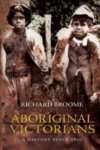
For sane and well balanced histories that are sympathetic to both Aborigine and Settler, you cannot do better than Richard Broome's Aboriginal Australians and his more recent Aboriginal Victorians.

Tuesday, December 13, 2005

Race Riots in Cronulla

Well I finally worked out how to upload images to my blog. So here's me looking very serious in my office. (Actually it's my old office from a year ago - oh well.) More racial violence in Cronulla overnight and the Prime Minister will no doubt repeat his mantra that "Australians are not a racist people." Well, I guess it's all relative, and maybe we aren't as racist as some. But the measure of our national spirit should not be that of other countries. If we compare ourselves with more patently racist socities we might be tempted to pat ourselves on the back, but if we measure ourselves against the principles of the Reign of God, we would hang our heads in shame. Australia has a long history of racist attitudes. Have we forgotten that the White Australia policy, established by law at Federation and only dismantled in 1966, explicitly discrimated against all but British-born and British-looking immigrants? What about Chinese miners being beaten to within an inch of their lives at Lambing Flat in 1861 (just one instance of such Gold Rush xenophobia)? Not to mention (actually, no, we should mention) our brutal past regarding the Indigenous people of this country. Lord have mercy. Christ have mercy.

AddThis

Share |