Showing posts with label Australian History. Show all posts

Thursday, November 26, 2009

The Master: The Life and Word of Edward H. Sugden

I'm pleased to announce the publication, by Uniting Academic Press, of the result of a symposium at Queen's College last year on Edward H. Sugden, its first Master. My contribution is chapter 9, "Reading Wesley's Sermons in Edwardian Melbourne." You can purchase a copy through Rainbow Book Agencies. Here is a brief excerpt.

"The Edwardian era was a very religious one which, at least for A.N.S. Lane produced far more interesting religious figures than those of the Victorian age which preceded it. It was the age of religious controversialists such as G.K. Chesterton, and of such figures as William James and H. G. Wells who, though not themselves religious, gave Christians much to think about and contributed significantly to public religious discourse...Though his life extends well beyond the Edwardian period, Sugden was in many ways an Edwardian figure and the designation 'Edwardian' is a legitimate description of his social, cultural, ecclesiastical and theological milieu, and more than simply a play on words...Thirty two years after [his arrival at Queen's] Sugden having become a well known, much loved and sometimes controversial church leader [published] an annotated edition ofJohn Wesley's Standard Sermons...The fact that Sugden's work is still in print is perhaps a testament to an ongoing interest in Wesley's Sermons rather than in Sugden himself. The description in the Preface to the American edition of 1986, published by Zondervan, describing Sugden's work as 'the best existing edition of Wesley's standard sermons' cannot be taken seriously and is certainly not the case. It had then already been replaced by the superior critical edition of Albert C. Outler published in 1984...While somewhat helpful in placing each sermon in its context in Wesley's life and ministry and the eighteenth century world in general, [Sugden's annotations] add nothing to the more critical work done on the Sermons since Sugden's time... [they] are perhaps most valuable in providing insights into the practices of the Methodist Church of his day and there are many interesting sidelights for the reader... "

"The world of an eighteenth century Anglican priest and that of an early twentieth century Methodist minister were very different worlds indeed. Conservative Methodists were holding on to the earlier world; liberal evangelicasl [like Sugden] were pushing forward to a new one. Sugden's annotations are symptomatic of this development. To study Sugden's notes on Wesley is to see two worlds in collision, as the 'reasonable enthusiasm' of Mr. Wesley meets the rational modernism of Mr. Sugden. Few Methodists today would make much fuss over theistic evolution or biblical criticism. At the same time, while we have not entered a post-critical world, we do seem to have entered a post-liberal one. A post-liberal reading of Wesley would, I think, be willing to accept his 'storied world' without the need to dismantle it. A reader need no longer share the worldview of his or her subject in order to enter into a sympathetic understanding of it. Sugden cannot resist the need to 'correct' Wesley, yet he makes little effort to read him in light of Wesley's own Anglican theological tradition or the wider Christian interpretive tradition. He exhibits the rhetoric of modernist dismissal of all things ancient and pre-Darwinian. One may read Wesley today with a less defensive posture. Though some twentieth century Evangelicals hardened into Fundamentalism, Evangelicalism itself continued as the thoroughly modern movement it had always been, despite its own claim to be resistant to all things new. Sugden's edition of Wesley's Sermons reflects a recurring pattern in Evangelical religion - the unsettling tension between engaging with modern thought and holding to 'the faith once delivered.'"

Reblog this post [with Zemanta]

Thursday, July 02, 2009

Australia by A.D. Hope


A nation of trees, drab green and desolate grey
in the field uniform of modern wars,
darkens her hills: those endless outstretched paws
of sphinx demolished or stone lion worn away.

They call her a young country but they lie
she is the last of lands, the emptiest,
a woman beyond her change of life, a breast
still tender, but within the womb is dry.

She has no gods, no songs, no history:
the emotions and superstitions of younger lands,
her rivers of water drown among inland seas;
only the river of her stupidity

floods her monotonous tribes from Cairns to Perth.
In them at last those ultimate men arrive
who will not boast “we live” but “we survive”:
a type that will inhabit the dying earth.

And her five cities, like five teeming sores
each drains her: a vast parasite robber state
where second-hand Europeans pullulate
timidly on the edge of alien shores.

Yet there are some like me turn gladly home
from the lush jungle of modern thought, to find
the Arabian desert of the human mind;
hoping, if still from the deserts prophets come,

such savage and scarlet as no green hills dare
springs in this waste, some spirit which escapes
the learned doubt, the chatter of cultured apes
which is called civilization over there.

Thursday, February 14, 2008

The Apology

Kevin Rudd in Darwin during the election campaign (AAP: Alan Porritt)


Yesterday the Prime Minister, Kevin Rudd, made history with the following speech. I'm sure you've already heard it and read it, probably more than once, but I wanted to post it here because many of my international vistors (hopefully some of my Australian History students from Houghton Down Under, may not have got it elsewhere. Mungo Macallum has complained that it should have been written by a poet, but he is one, so he would say that. OK so it may have been written by a parliamentary team of speech writers but it is historic, and it is just, and it is a solid foundation for a shared future.

"Today we honour the Indigenous peoples of this land, the oldest continuing cultures in human history.

We reflect on their past mistreatment.

We reflect in particular on the mistreatment of those who were Stolen Generations – this blemished chapter in our nation’s history.

The time has now come for the nation to turn a new page in Australia’s history by righting the wrongs of the past and so moving forward with confidence to the future.

We apologise for the laws and policies of successive Parliaments and governments that have inflicted profound grief, suffering and loss on these our fellow Australians.

We apologise especially for the removal of Aboriginal and Torres Strait Islander children from their families, their communities and their country.

For the pain, suffering and hurt of these Stolen Generations, their descendants and for their families left behind, we say sorry.

To the mothers and the fathers, the brothers and the sisters, for the breaking up of families and communities, we say sorry.

And for the indignity and degradation thus inflicted on a proud people and a proud culture, we say sorry.

We the Parliament of Australia respectfully request that this apology be received in the spirit in which it is offered as part of the healing of the nation.

For the future we take heart; resolving that this new page in the history of our great continent can now be written.

We today take this first step by acknowledging the past and laying claim to a future that embraces all Australians.

A future where this Parliament resolves that the injustices of the past must never, never happen again.

A future where we harness the determination of all Australians, Indigenous and non-Indigenous, to close the gap that lies between us in life expectancy, educational achievement and economic opportunity.

A future where we embrace the possibility of new solutions to enduring problems where old approaches have failed.

A future based on mutual respect, mutual resolve and mutual responsibility.

A future where all Australians, whatever their origins, are truly equal partners, with equal opportunities and with an equal stake in shaping the next chapter in the history of this great country, Australia."

Wednesday, October 11, 2006

Ned Kelly and the Wesleyan Preacher

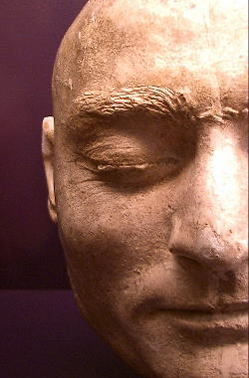
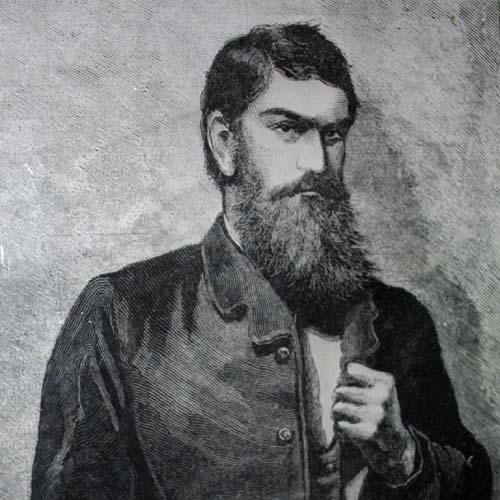
At left is a remarkable image of the death mask made from Ned Kelly's actual features and displayed at the wax museum in Bourke St in 1880. This is from the interesting Kelly archaeology site Two Huts

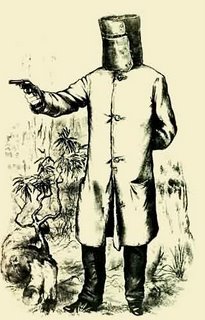
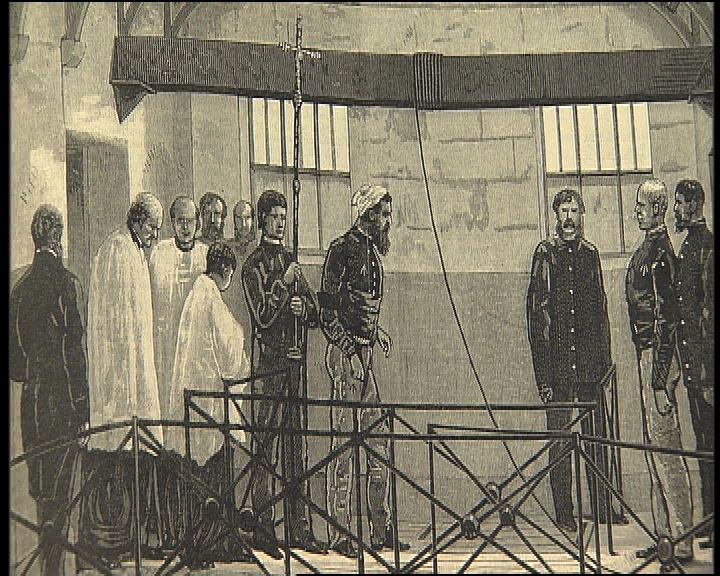
A little known story of Ned Kelly is his death row encounter with the Wesleyan preacher John Cowley Coles. The story is told in the generously titled book The Life and Christian Experience of John Cowley Coles Giving the History of Twenty-seven Years of Evangelistic Work in the Colony of Victoria, Australia and elsewhere, principally in connection with the Wesleyan Methodist Church, also chapters on the doctrine of entire sanctification and the enduement of power, with an account of the social conditions and mode of life of the diggers in the early days of gold digging in the same colony, written (at the request of many of his friends) by himself (London: Marshall Brothers and Melbourne: M. L. Hutchinson, 1893). Boy, they really liked long book titles in those days! Coles held services for the inmates of the Melbourne Gaol and members of his Band meeting were keen to know if he would be visiting Kelly. He applied to the governor of the gaol “as representing a Christian Church” but the governor said, “No, Kelly is a Catholic and has his own minister.” Not to be put off so easily Coles and his Methodist friends prayed that “the Lord would open the cell door” in order that he might “enter and see Kelly, in order to talk with him about his soul.”

Soon after at the conclusion of one of the prison services, a warder approached Coles and asked if he would like to see Kelly. He said he would but that the governor would not allow it. The warder told him there was a regulation that any prisoner who requested it could see the minister who had been conducting the service. The warder went to see if Kelly wanted to speak with Coles and was told that he did and that he had heard every word of the service from his prison cell. Here is the fascinating description Coles gives of Kelly. "This man by no means looked a ruffian. He had rather a pleasant expression of countenance. He was one of the most powerfully built and finest men that I ever saw. He treated me with great respect, listened to all I had to say, and knelt down by my side when I prayed."
As for Coles’ ministry approach to Kelly here is how he describes his advice to the captive bushranger. "I refused to hear anything from him about his bushranging exploits, but I kept him to this – that we might die any moment. I might not live another half-hour; but if he did not die before he was sure to be executed on a certain day, and that he was a sinner standing in need of a Saviour…He evidently wanted me to think that he did not care for his position, and that he would see it out like a man."

This was some time after the 22nd September, 1880. Coles spoke with Kelly again, this time for “about a minute or two” on the 7th October, along with the Rev. R. Fitcher, who conducted the service that day. Kelly was “heavily ironed, going to the exercise yard.” On the 20th October, after preaching at Kelly’s request, Coles accompanied Kelly to his cell. Coles had preached from the text “Prepare to meet your God.” Immediately he set him straight on his purpose in such visits. "Do not think, Kelly, for one moment that it is out of any foolish curiosity to see you that I have sought these interviews with you; nothing of the sort. Indeed, I wish I could be spared the pain of seeing an intelligent young man like you in such an awful position. My sole object in speaking to you this morning is to impress on you the fact that you have a soul to be saved, or for ever lost; that Christ died for the chief of sinners, and if you will but be sorry for your sin and confess it to God and ask for mercy for Christ’s sake, He will have mercy on you."

Kelly’s response shows a remarkable openness and an exercised conscience as he reflected on his bushranging exploits. "I have heard all that you said this morning…I believe it all. Although I have been bushranging I have always believed that when I die I have a God to meet…When I was in the bank at Jerilderie, taking the money, the thought came into my mind, if I am shot down this moment how can I meet God?" Coles and Kelly then knelt side by side and prayed together. Upon standing Kelly crossed himself and thanked the preacher for his ministry. This was the last time the two men spoke together. Before long Kelly went to the gallows. Coles did not attend the execution. "I could have done the man no good by doing so,” he reflected, “and was saved the pain seeing a fellow creature ushered into the presence of God.”

This is a touching portrait of a little known instance of pastoral care in a moment of personal crisis. Kelly the penitent Catholic Christian kneels beside Coles the forthright Wesleyan preacher, the two men together calling upon God to grant mercy to a fallen sinner.

If you enjoyed this blog entry you might also enjoy the following: Ned Kelly and the Anglican Bishop; The History Wars; "Wiping Out" the Aborigines and The Proposition

Ned Kelly and the Anglican Bishop

Bushrangers have been seen as heroes and champions of the underdog, who, Robin Hood style, robbed from the rich to give to the poor (or at least to unseat the rich from the arrogance of privilege). On the other hand, they have also been seen as mad dogs, murderers, scoundrels, and rebels, deserving the full weight of civilization’s unbending justice. Australia’s most famous bushranger Ned Kelly (1855-1880) has generated both sets of sympathies.

According to Bill Gammage, “Bushranger is an Australian word. It evokes bushcraft, daring, defiance, and freedom from convention, rather than crime or evil. It touches an Australian nerve [as evidenced by] G. T. Dicks’ 1992 A Bushranger Bibliography [listing] over 1200 books [almost 100 on Ned Kelly]." Sympathy for Kelly is not something read back anachronistically into a distorted past. It began during his lifetime and has continued to the present. I recently came across the following interesting incident in Morna Sturrock’s biography of Bishop James Moorhouse, Bishop of Magnetic Power (2005) while reviewing her book for History Australia, which brings sympathy for Kelly into focus. The second Anglican Bishop of Melbourne, Moorhouse, visited north-west Victoria in October-November 1878. The newspaper headlines spoke of the “Mansfield Outrage,” Sgt. Michael Kennedy having been shot dead by Ned Kelly, alkong with three other cionstables, at Stringybark Creek. His body was brought into Mansfield and Moorehouse was called upon to preach there. Kennedy (and Kelly) were Catholic but Moorehouse visited his grieving widow to console her and also to strongly advise her against viewing “the poor disfigured corpse” of her husband. Half his face had been shot off and a wild animal had chewed off his left ear sometime over the three days his body lay in the bush before it was discovered. "She agreed," wrote Moorhouse, "that I should go and see if the sight were fit for her; and when I told her it would be wicked for her in her state of health to subject herself to such a shock, she went quietly home. I attended the poor Sergeant’s funeral. The Priest asked me to walk with him at the head of the procession."

The funeral service, from St. Francis Xavier’s Catholic Church was quite an ecumenical occasion with Moorehouse leading the procession along with Father Scanlan, Samuel Sandiford, the Anglican rector of Mansfield, and the local Presbyterian minister, the Rev. Reid. In the age of sectarianism this is quite notable. Father Scanlan had ridden by night, “along the wild road from Benalla, with the reins in one hand, and a revolver in the other.” While standing in solidarity with the victims of the crime and insisting that the perpetrators should be tracked down and arrested, at the same time Moorehouse showed remarkable sympathy for the Kelly Gang. "Poor wretches! One cannot help pitying them, crouching among the trees like wild beasts – afraid to sleep, afraid to speak, and only awaiting their execution. But bushranging is so horrible, so ruthless, so utterly abominable a thing, that it must be stamped out at any cost." Two days after the funeral while preaching in the church at Mansfield he repeated these remarks, prayed for the murderers and told the people they should “pity the poor wretches who caused us to mourn over these disasters.”

Not long after the funeral, Moorehouse and his wife stopped at an inn in Benalla for a meal and a change of horses. They were surprised to notice Chief Commissioner Standish, who was overseeing a yearlong search for the Kelly Gang, leave the inn without speaking with them. As the Moorehouses moved on they noticed a mounted policeman up ahead of them and others stationed here and there along their route as if keeping watch over them. Upon returning to Melbourne he was informed that the Kellys were angry at the Bishop’s influencing of public opinion against them and had planned to kidnap him, spirit him away to the mountains and hold him for ransom. While enjoying a smoke in the garden of the inn he had been in range of their rifles. However, some of the Kelly supporters thought such an action would damage their cause and so warned the police; hence the armed escort.

Many alienated small farmers and farm labourers became Kelly “sympathisers.” John McQuilton’s The Kelly Outbreak (1979) describes widespread agricultural ignorance, poverty, and disillusionment in north-east Victoria at this time. Colin Holden’s history of the Diocese of Wangaratta, Church in a Landscape, states that the Kelly Gang enjoyed support in the local community because struggling farm workers saw Kelly’s plight as an exaggerated form of their own situation. Rural newspapers of the day noted that the Kellys also enjoyed support among “the respectable and well-to-do” people, including Anglicans, “who might in other circumstances appear as supporters of law and order.” The Church of England Messenger said that bushrangers could always count on finding “punctual provisions and trusty spies among the settlers in the remote districts.”

In discussing the question of whether Kelly should be viewed as a violent psychopathic criminal or a hero of the people, more sinned against than sinner, one of my students asked whether 100 years ago we would be remembering serial killer Ivan Mallatt as favourably as we remember Kelly today. The answer to the question is “no” for many reasons, but one of those reasons is that Kelly was a popular figure in his day. Ivan Mallatt and his kind have no supporters. They are psychopaths who seem to kill for no reason and with no remorse. 38,000 people signed a petition for Kelly’s pardon. No one today advocates for Millatt. Kelly was a violent man enmeshed in the criminal underworld of north-east Victoria in age of widespread police brutality and corruption. Criminals are the results of both nature and nurture; communities produce them as much as women give birth to them. It was “not easy being an Irishman in Queen Victoria’s colony.” People do not commit crimes simply because they are evil and the world is not a place made up of men and women who are either good or evil. We are more complex creatures than that. I think Bishop Moorehouse understood this and so he prayed for the “poor wretches” who made up the Kelly gang and he exhorted his flock to have pity on them. So was Kelly a hero or a criminal? Probably both.

If you enjoyed this blog entry you might also enjoy the following: Ned Kelly and the Wesleyan Preacher; The History Wars; "Wiping Out" the Aborigines and The Proposition

Wednesday, August 23, 2006

The History Wars

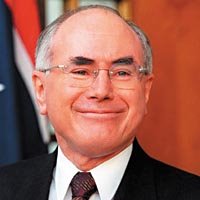
The Prime Minister has recently called for a renewal of history teaching in Australian secondary schools, with the suggestion of making history a compulsory subject in all schools. Mr. Howard is concerned about how we are to preserve, in an increasingly pluralistic society, a sense of Australian national identity, without an overarching and coherent narrative. “I do not believe,” he said, “that you can have any sensible understanding and, therefore, any sensible debate about different opinions of Australian history unless you have some narrative and method in the comprehension and understanding of history. How you can teach issues and study moods and fashions in history, rather than comprehend and teach the narrative, has always escaped me.” (“Summit divides over compulsory history,” The Age 17.08.06)

Just last week a summit of historians, politicians, and educators met in Canberra to discuss the Prime Minister’s proposal. This seems like a welcome trend but there are some who are concerned about the possible “politicization” of history that may result from such an approach. If Australia is to have an “official” history, if the Prime Minister is to appoint the historians who write the curriculum, if government funding is to be directed to some projects and not others, then whose version of history will be sanctioned? Already the opposition Labor Party is concerned that the government wants to rewrite history to reflect its own conservative world-view. Opposition education spokeswoman Jenny Macklin said in The Age “The teaching of history is very important in our schools but the last thing we want is John Howard pushing his ideology down the throats of our children.”

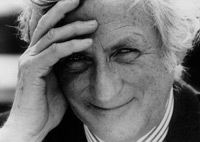
Is this just the opening round in the next campaign of the “history wars”? Debates about the nature of the past are hugely significant in shaping the identity of any people and in charting a way forward into the future. The heart of the argument can be traced back to a phrase coined by Geoffrey Blainey (left) in his Latham Lecture of 1993 and then subsequently picked up by John Howard when he won government in March 1996. Blainey referred to the pessimistic view of Australian history as “black-armband history.” Earlier generations had held a very positive “three cheers for the British and their great accomplishments” kind of history. This at least was the history I was taught at school. There was lots of flag raising, and military uniforms, with the Aborigines somewhere in the background looking on from behind trees, waiting to perform cultural ceremonies to the delight of their newly arrived guests. No blood was spilt (or very little) in the history I learned at school. Words like “genocide” or “massacre” were never used. Blainey held that in reaction to this overly rosy view the pendulum had swung too far the other way and on overly pessimistic view had emerged resulting in an equal but opposite historical jaundice. (It should be noted that black armbands were used in the Aboriginal protest movement in the 1970s, before Blainey coined the term, as a symbol of Aboriginal dispossession.)


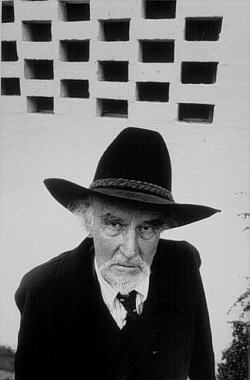
The person most responsible for this “black armband view” of Australian History, according to Blainey, was Manning Clark (above), the man usually seen as the founder of the approach to Australian History as Australian, rather than as an episode in British history. Blainey maintained that a “guilt industry” had emerged from Clark’s work outsides of the historical profession – in the ABC, in the Australian Labor Party, in educational institutions, and in the High Court. Too much emphasis was being placed, it was said, on the dispossession of the Aborigines, and on the destructive impact on the environment of European civilization. White Australians were racist, sexist, militarist, and exploitative and they needed to make reparations. John Howard, picking up on Blainey’s criticisms came into office in 1996 asserting that “the balance sheet of Australian history is a generous and benign one.” This appealed to an Australian sense of patriotism and national pride and no doubt contributed to a Liberal victory. [Mark McKenna, “Black-armband history,” in Graeme Davison, John Hirst, and Stuart Macintyre, eds. The Oxford Companion to Australian History (Melbourne: Oxford University Press, 2001), 73.]

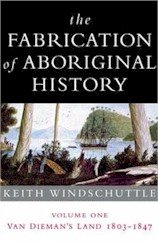
More recently controversy has broken out over the nature of the dispossession of the Aborigines in Tasmania. In 2002 Keith Windschuttle’s The Fabrication of Aboriginal History made the claim that the “genocide” of Tasmanian Aborigines was a myth and that there had been no widespread massacres of Aboriginal people during the period of white settlement there. He argued that the Aborigines had no sense of ownership of land; such an idea was not part of their mental universe so they could not be said to have had their land stolen from them. The land was “terra nullius” – an empty land, belonging to no one and so legitimately appropriated by the British crown.

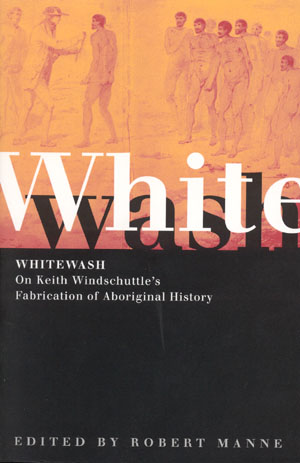
Windschuttle’s book created a storm of controversy and seasoned historians of Aboriginal and settler relations on the frontier, such as Henry Reynolds, clashed head on with Windschuttle’s hypothesis, as well as with his historical method and accuracy. Winschuttle became something of a cause celebre among right wing conservatives and The Australian ran a series of pro- and anti-Windschuttle pieces that kept the debate in the national consciousness for quite a while. For its own part The Australian tended to editorialize in favour of Windschuttle and he became something of a figurehead for those who opposed the “black-armband” approach to history. Professor Robert Manne, one of Australia’s leading public intellectuals, has lamented the way that “so many prominent Australian conservatives have been so easily misled by so ignorant, so polemical and so pitiless a book.” [Robert Manne, ed. Whitewash: On Keith Windschuttle’s Fabrication of Aboriginal History (Melbourne: Black Inc. Agenda, 2003), 11.


The latest move from the Prime Minister continues to stir the pot on our national history. So here we are in Australian in 2006 certain that history matters, and that the generally understood narrative of a nation does indeed affect national identity, politics, education, and a good deal more.

[If you liked this post you might also enjoy reading the following previous posts - Trying to Speak Good Christian in Canberra, Bring the Troops Home, "Wiping Out" the Aborigines, The Proposition and Race Riots in Cronulla.]

Tuesday, May 23, 2006

La Trobe Graduation

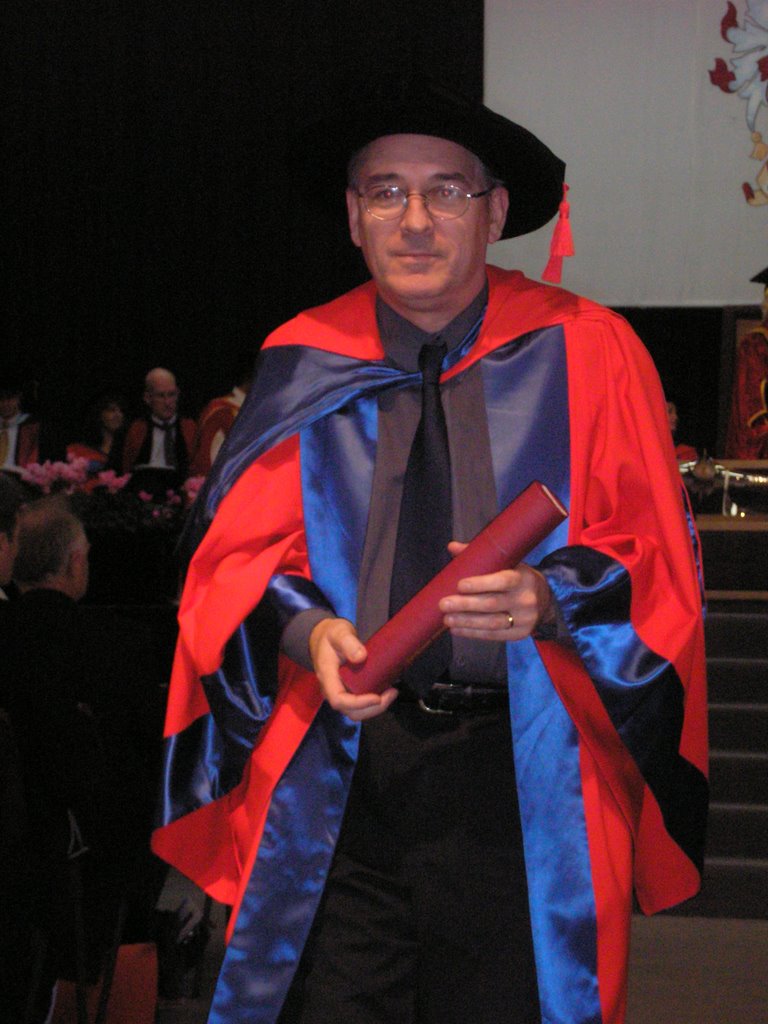
At Ludicrousity's request, here are some photos from my recent graduation at La Trobe University. My thesis was formally finalised in October of last year (after being submitted as far back as March!) but I had to wait until now to shake the Chancellor's hand and get my testamur. (The crimson rosella is known for its bright plumage.)


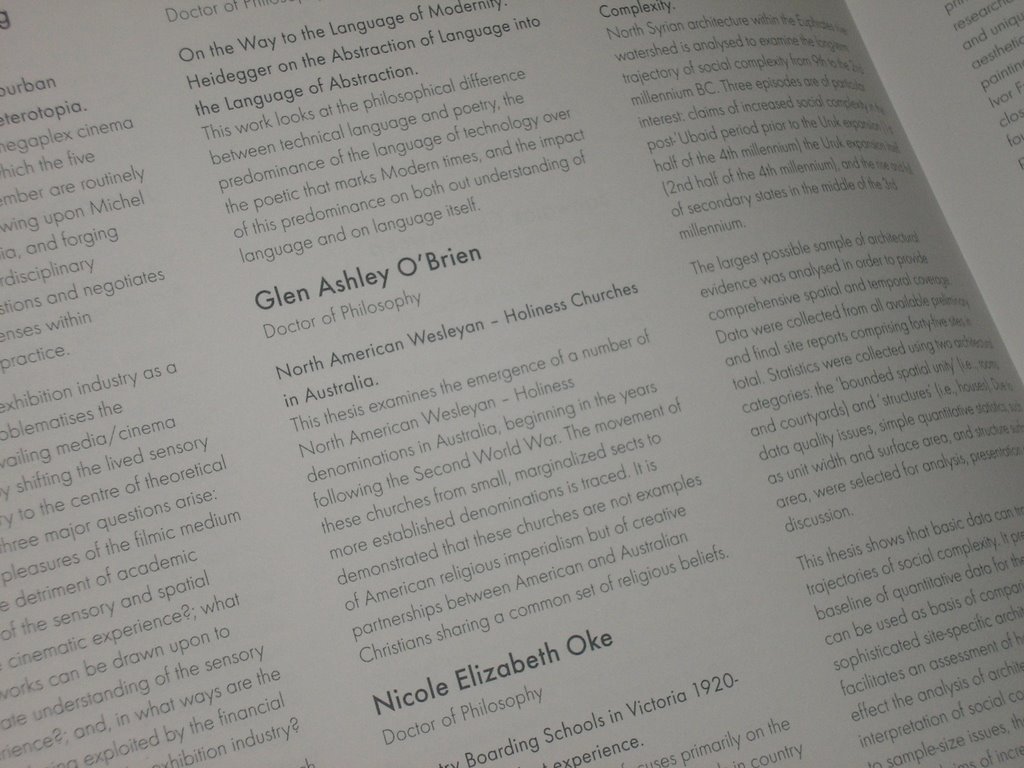
My doctoral citation.


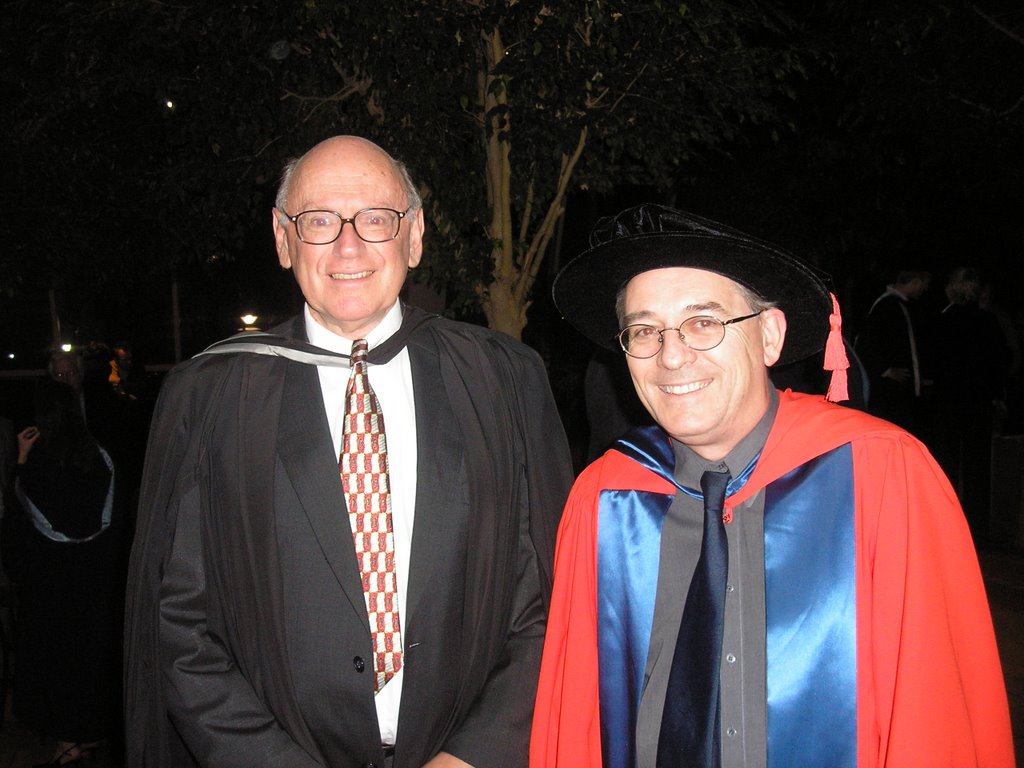
Here I am with "the gadfly of Australian history," my supervisor John Hirst. Thanks John. Couldn't have done it without you.

Wednesday, December 14, 2005

"Wiping Out" the Aborigines

In replying to my comments on the Cronulla Race Riots a friend said. "If you think the P.M. is not as aware as you are, and probably much more so, well!!!" I didn't mean to say that the PM's comments were naive or that I was more aware than he (though I admit my comment may have sounded that way). My concern is that he can't just come right out and say that the violence in Cronulla has underlying racism beneath it. Why can't he just name 'the "r" word.' The police commissioner has done so, why can't the PM? The only way to healing in our communities is to start to speak the truth without doublespeak or spin. When "white Australians" (for what of a better term) are wearing swastikas, draping themselves in the Australian and/or Eureka flags, chanting ""Today is ethnic cleansing day," "Death to Lebs!" and "F**k Allah," I think it's safe to say that racism may be behind it - why can't the PM call it that and then work toward healing?

(Here's another flag draper - Pauline Hanson).

My friend also took exception to my reference to the brutal history of white and black relations in this country, by stating that "While there were massacres on both sides with the present people and the European 'invaders,' at least there was no plan to wipe them out." In one sense there WAS a plan to "wipe out" the Aborigines and that was the government policy of removing "half-castes" from their family groups and resettling them in white families with the hope that they would be integrated into white society, marry Europeans, have children and eventually have their aboriginality "bred out." The prohibition on speaking their own language often encountered in missions, schools, and foster families was also a powerful method of "wiping out" their aboriginality.

At first the colonial government had a quite enlightened policy toward the Aborigines. Governor Phillip was under strict orders from the crown to deal justly with the Aborigines and not to take possession of any land without consent. Phillip was quite a just man in this respect. There was an early idyllic period when black and white Australians were given an opportunity to co-exist harmoniously. However, pastoralism put an end to all that, because to have sheep, cattle, and crops you need land, and if the country was going to fulfil its manifest destiny to grow and prosper it was going to need land. The Aborigines were in the way and when they defended their country they were killed by a civilization with much greater firepower. Social Darwinist ideas soon began to affect white attitudes. The Aborigines are lower on the evolutionary scale than the whites. They are doomed to extinction. The stronger race is destined to supplant the weaker and so on. It was thought to be only a matter of time until the Aborigines died out and then all the land would be ours anyway. The problem was that Aboriginal women were bearing the children of white men (sometimes as a result of rape, sometimes through consenting relationships and even marriage). The "full blooded" population had diminished considerably by the late nineteenth century but the "half-caste" population was on the rise. So a new policy was devised - assimilation. This was a policy that was designed to Europeanise the "half-castes" and leave the few "full bloods" that were still living in the traditional ways alone in the far reaches of the outback where they couldn't get in the way of the nation's destined prosperity and growth. Even then, Menzies allowed the British government to test nuclear bombs at Maralinga, without telling any of us until it had already happened!

Since the 1970s when Aborigines began to get a little more organised and militant about their cultural identity and rights, we have had to learn to face this ugly past. It seems to me that the history books that "don't tell it like it is" are the ones we read when we were at school,in which the settlement of this country was a very heroic and rather polite affair of nice men in red uniforms raising union jacks on beaches while quaint looking blackfellas looked on from the background in polite admiration. All blood was expunged from the record. We need to redress this imbalance in our public discourse.

For sane and well balanced histories that are sympathetic to both Aborigine and Settler, you cannot do better than Richard Broome's Aboriginal Australians and his more recent Aboriginal Victorians.

Saturday, December 10, 2005

The Proposition

I wrote the following film review back in October for Peter Breen of Urban Eyes and Cafe Jugglers for posting on his "Out of This World and Into It" email letter. I hope he won't mind me republishing it here.

Not a film for the fainthearted, The Proposition (Directed by John Hillcoat; Written by Nick Cave) peels back the layers of revisionist history and gives us an unsettling look at the brutality of nineteenth century Australia. A self-styled "Australian Western," this is essentially a bushranger film, set in the 1880s, but these madmen make Heath Ledger's Ned Kelly look like a pansy! There isn't a bad performance here, and Nick Cave's music is suitably haunting. Guy Pearce (pictured left) is Charlie Burns the bushranger tracking down his homicidal rapist brother Arthur (Danny Huston). Charlie has accepted a proposition from the local policeman, Captain Stanley (Ray Winstone) - if he kills his older brother he and his younger brother can escape the gallows. Eventually he finds his brother and "will he or won't he kill him?" is the question that keeps the audience going. Stanley and his wife (Emma Watson) seek desperately to "civilize" this savage country. They want to replicate England as best they can, steadfastly refusing to come to terms with, or seek to understand, the hostile wilderness that surrounds their little island of a frontier town. The visual cues to this are fascinating to watch for. Mrs. Stanley has roses, that most English of plants, growing in her front yard. The fence around their homestead is a white picket fence (though the cross bars are rough-hewn Australian gum, an interesting juxtaposition of old and new world materials). A portrait of the Queen dominates their dining room. They open a box of Christmas decorations including white cotton "snow" and they sit down on Christmas Day to carve a hot roast dinner, though it's probably 100 degrees in the shade outside. During this Christmas meal they are brutalised by Arthur, the mad Irish bushranger, who wraps his victim's bashed and bleeding head in the union jack. Here in this climactic (and difficult to watch) scene, Charlie must make his decision - does he intervene and take his brother out or will family ties prove too strong?

Indigenous people fare quite well in this film. There are certainly depictions of subjugation, humiliation, brutality and race hatred ("What is an Irishman?" asks deranged bounty hunter Jellon Lamb [John Hurt] but a nigger turned inside out?") But at the same time, the Aborigines are a force to be reckoned with. Somewhat like a John Ford westerm where the Indians are almost a force of nature inhabiting the landscape like the the rocks and the desert sands of Monument Valley, the Aboriginal people of this film are a constant threat to those who dare to walk into their country (beautifully shot by the way). They are skilled warriors, they are dangerous, they know the territory in a way that white people could never hope to know it, and if you wander onto their turf, you might at any time find yourself fatally speared when you least expect it. Giving the Indigenous people the upper hand in their own country works well in establishing their dignity and self-reliance. Two other scenes work in a similar way. One of Arthur Burns' gang members is an Aboriginal man, and when a racist policeman falls into his trap while looking for his Aboriginal tracker (played by David Gulpilil - again!) he is told "You've got the wrong f***in' blackfella!" In a strange way you find yourself wanting to cheer for this guy - even though the life of a bushranger is hardly admirable, at least it's self-determining! More subtly, but just as powerfully, when Captain Stanley lets his Aboriginal domestic servant go, before walking through the gate, presumably to return to his own country, he removes his shoes (symbol of the white man's repression), places them carefully in the dirt and then walks out barefoot. It's for reasons like these (and many others) that the extreme violence of this film can be forgiven. I would rather not watch graphic violence and am as uncomfortable with it as most people. But if it's a choice between the sanitised history I learned in school and the horror story that was Australia's actual colonial past, bring on the gore. I don't mind being shocked by violence and racism if it leads to outrage over them and concerted action against them. This is the effect the film ought to have on thoughtful viewers. It doesn't glorify bloodshed, but it has the potential to bring something redemptive out of it.

Thursday, October 27, 2005

It's Official!


Last Thursday (20 October) I received a call from my supervisor John Hirst to let me know that my PhD thesis has been approved without the need for any major rewrites or revisions (just a few minor changes). It feels great to have it finished. The following words from Martin Luther (pictured above) should keep me well grounded: "If you feel or imagine that you're right and suppose that your book, teaching or writing is a great achievement...then my dear man, feel your ears. If you are doing so properly, you will find that you have a splendid pair of big, long, shaggy, asses' ears."

AddThis

Share |