Sunday, May 28, 2006

The Superhero Test

I took the Superhero test and much to my surprise I am not after all Batman! This is a major identity crisis for me. I am experiencing profound cognitive dissonance because my blog is called "The Batcave" and my display image is the Dark Knight, and yet I have tested as that irradiated arachnid, that pesky Peter Parker. I am going to need some extended time in the Batcave to sort this out. No - wait...I'm not Batman so where do I go to sort things out? My bedroom at Aunt May's house? Oh pu-lease! That doesn't sound one tenth as cool as "the Batcave." Maybe I can be a new superhero - Spiderbat! Mmmm. maybe not..

You are Spider-Man


Spider-Man

80%
Superman
80%
Supergirl
55%
Green Lantern
45%
Iron Man
40%
Robin
35%
Hulk
35%
Wonder Woman
30%
Catwoman
30%
Batman
30%
The Flash
20%
You are intelligent, witty,
a bit geeky and have great
power and responsibility.
Click here to take the Superhero Personality Test

Wednesday, May 24, 2006

The Gift of Prophecy

We have been discussing the gift of prophecy in our theology class and a couple of students have raised questions about my approach to the topic. It seem to me that there are some major problems with the contemporary expression of "prophetic utterances," “words of wisdom” and “words of knowledge.” They open up the potential for spiritual abuse and should be approached very cautiously in my opinion. All we need to know has been recorded for us in the Bible. No extra-biblical “prophecy” can ever add to this revelation so why is there a need for these so-called ”prophetic utterances”? If we believe God has some words of counsel to pass on to a fellow believer we should approach them as brother or sister and share it in a natural way, without any high sounding “thus saith the Lord” which claims an authority for ourselves that we do not possess.

It is true that "prophecy," "the word of wisdom," and "the word of knowledge" are spiritual gifts referred to in the Bible. However, in the case of the latter two, there is no other information given to us to explain exactly what those gifts were and how they functioned. Why could the "word of wisdom" not simply be the impartation of wise advice to another believer and the "word of knowledge" something one believer knows and then passes on to another believer for their spiritual help? The typical Pentecostal practice smacks of clairvoyancy to me - "I feel that somebody on this side of the room is having marital problems" or "somebody over here has back pain." In any representative room there would be sure to be more than one person who fits such descriptions.

Prophetic utterances in the early church were given in the absence of a completed New Testament when the church needed to be guided by oral proclamation in a more authoritative way than is true today. I do not need to consult the word of a "prophet" today when I have the New Testament in front of me giving me everything I need to know for life and godliness, and godly pastors and teachers who open up the scriptures in the gathered church. Also we should remember the indwelling Holy Spirit who is our Teacher and Guide. Prophecy was given for the "edification, exhortation, and comfort of the church." I believe all of these things are met through anointed preaching which has the authority of scripture behind it, a more dependable authority than the authority of a "prophet's" personality or his or her limited human perspective.

I don't mean to call into question the "prophetic words" that may have guided any person but for every one that turns out well there is at least one other that does not. For example, some years ago, the pastor in the charismatic church I was attending was secretly engaged in sexual immorality in the counselling room with a series of women in the congregation. At this very time, a well-known Pentecostal pastor with a "prophetic" ministry (I won't disclose his name but if I did you would immediately recognise him) prophesied along these lines (from my memory). "My children I say unto you that this man, your pastor, is my anointed one. He is a good man and there have been rumours and innuendos about his conduct which must stop. Touch not my anointed for he is my chosen one..." etc. (you get the idea). He was "outed" a short time later when one of the women bravely came forward to blow the whistle on him. Now this "prophetic message" could not possibly have been from God. This man spoke not from God but from his own imagination. The Old Testament was very clear on what was to happen to those who said "thus saith the Lord" but really spoke from their own dreams. They were to be taken outside the camp and stoned to death! These days we approach it differently. We give them national prominence, television shows and huge salaries.

It seems to me a safer way to go is to allow God's gifts to flow through us in the ordinary ways of preaching, teaching, counselling and mentoring. This will yield all the guidance that modern day "prophecy" is supposed to bring, but without the attendant problems of claiming to speak infallibly and authoritatively from God things which turn out to be falsehoods. You may not agree with these thoughts but please do not think that they come from any disregard for the Scriptures or any questioning of the genuine ministry of the Holy Spirit. I am simply trying to follow the scriptural command to "test the spirits" and "prove all things."

Tuesday, May 23, 2006

La Trobe Graduation

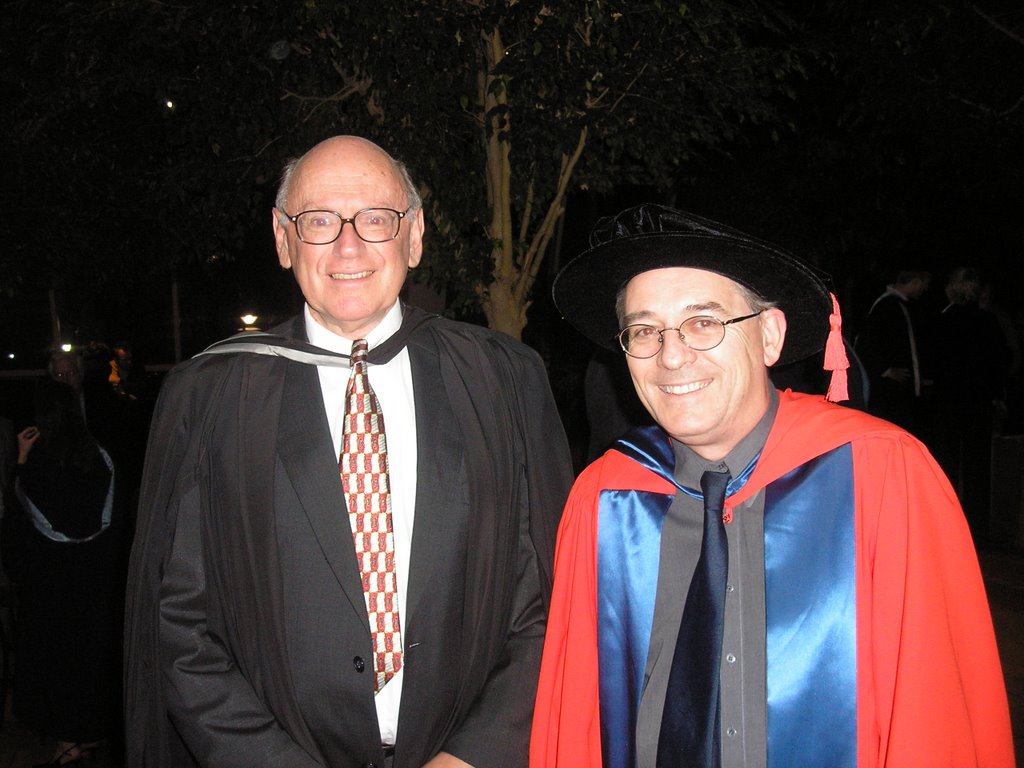
At Ludicrousity's request, here are some photos from my recent graduation at La Trobe University. My thesis was formally finalised in October of last year (after being submitted as far back as March!) but I had to wait until now to shake the Chancellor's hand and get my testamur. (The crimson rosella is known for its bright plumage.)


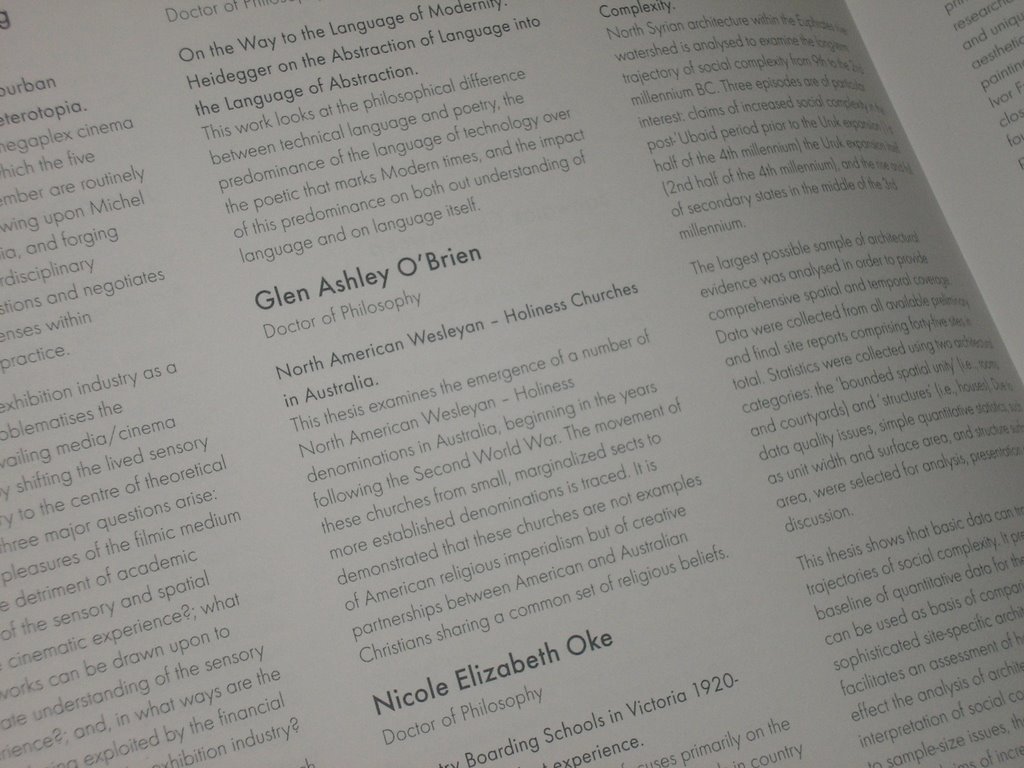
My doctoral citation.


Here I am with "the gadfly of Australian history," my supervisor John Hirst. Thanks John. Couldn't have done it without you.

Tuesday, May 02, 2006

Son of a Preacher Man

The Boy Wonder and I went along to see Harley Breen's one man show Son of a Preacher Man in Flinders Lane last Tuesday night. It was crude, rude, irreverent...and very funny. It would be easy for a Christian to be offended at the material but it would be all too easy to rush and in and smugly condemn without asking what truth is being offered here. We need to hear his perspective on why the church doesn't appeal to so many like him who have left the church disillusioned figuring it has nothing to offer. For those who think this show may be just a cathartic exercise in axe-grinding against repressive parenting - think again. It's clear that Harley loves, respects, and admires his parents and that he respects the choices in life they have made, even though he hasn't chosen to make those choices himself. More often than not it is the people in the congregations that his parents served that get the most stick, and if you're a preacher's kid too I'm sure you'll have a bunch of similar stories to tell about the strange people who inhabit the pews of every suburban church.

Harley is at his best when he is sharing funny stories from his childhood - sibling rivalry, puberty, and adolesence all yield their hilarious moments. The slapstick disguised as political comment against the Howard government in the Gummy Bears routine is great. The show is weakest in its middle section when Harley dons the clerical garb and plays the part of a preacher on the take. The effeminate preacher intent only on exploiting people is a wornout cliche. I have no objection to lampooning the clergy as such (we're all fair game) but a more original approach was needed to lift this part of the show beyond the humdrum thing we're used to seeing on TV. It's the real Harley Breen that works best, not the two-dimensional caricature of this all-too easy to deride target.

In the medieval world, the jester was ostensibly for the purposes of entertaining the king and his court. But he also played a subversive role. With skill and craft he could use his humour to point out the vanity or folly of the kings' character or actions, thus turning a mirror on the royal personage. As an innocent child was needed to point out the fact that the emperor had no clothes in Hans Christian Anderson's folk tale, so it was the court fool who often played the role of pointing out the pretensions of royalty. Harley Breen's show turns a mirror on certain attitudes found in the church that are positively unChristian and need to be unmasked and repented of - the idea that Christians are by definition better people than all others (clearly not so), that Christians often show little respect for indigenous cultures and seek only to supplant them and replace them with European "civilization" (often, though by no means always, the case with missionaries), and that Christians can at times be violent toward those of other faiths.

One of Harley's Dad's former parishioners told him that his show was evil and blasphemous and that he was going straight to hell, apparently without seeing the irony that this was a rather "hellish" thing to say to another human being. But there is a difference between blasphemy and criticism. I once rebuked a youth camper for telling a distasteful joke about God and told him that we should be carefuil not to use the Lord's name in vain. Later in the camp he overheard me telling a joke about the church and he decided to rebuke me in turn. I told him there is a difference between mocking God and laughing at the church. It's a healthy thing to be able to laugh at oneself. Harley's show doesn't mock God so much as point out the inconsistencies of professing Christians, which is a different thing altogether.

There's a lot of truth in humour - we have to take it seriously (pun intended). The Danish philosopher and theologian Soren Kierkegaard saw the closest proximity between theology and comedy. Comedy sees tragedy from the viewpoint of its resolution, so comedy helps us transcend tragedy by placing it in proper perspective. This is why, for Kierkegaard, humour was the state of consciousness nearest to religion. Some like Harley Breen use humour to resolve the tragedy of the church's behaviour by walking away from it. Others, without denying the tragedy, choose to remain committed to the church, convinced that in its sinfulness it is really only a microcosm of all humanity, but convinced also that in the church (though not exclusively there) God offers his grace to those who need it. I'm reminded of the Docetists of the early church who were willing to accept that Christ was divine but could not accept that he was also human. It is the very humanness of the church, its fallenness, that many people find unacceptable. But the church does not claim to be a perfect society of saints (though admittedly some Christian movements have tried to make that claim.) It is always a "mixed multitide" of people on various stages of the way of Christ. And the Church exists also for those who cannot bring themselves to enter it or who walk away from it. It exists this way not because it is the only place where God is at work, but because Christ has united himself to his followers by calling them his friends, and, corporately, his Bride. It's okay to have a problem with the way the church behaves but if we have a problem with the Bride we do have to take it up with the Bridegroom.

In his final gag Harley tells of how he decided to try being a Buddhist for a day. He knew that according to the tenets of Buddhism he was supposed to respect all sentient beings, including the smallest creatures, so when he stepped on a bug, he grew angry with himself and kicked the dog. Now he felt even worse. Finally he saw a Buddhist monk, and he angrily and violently knocked him to the ground. Then came the punch line - "Well, I guess I'm still a Christian after all." If only the tragedy could be resolved so neatly. If violence or greed or bigotry or selfishness were uniquely Christian traits, we could solve the world's problems by getting rid of (or at least quarantining) all the Christians. But these things are human, not uniquely Christian, traits. The church tries to bear witness to a better way - to the way of Christ. That it does so inconsistently only shows that it is fully human. In the end, God is speaking both through and to the Son of a Preacher Man - for those who have ears to hear.

The Theology of the Superheroes I: The Incredible Hulk

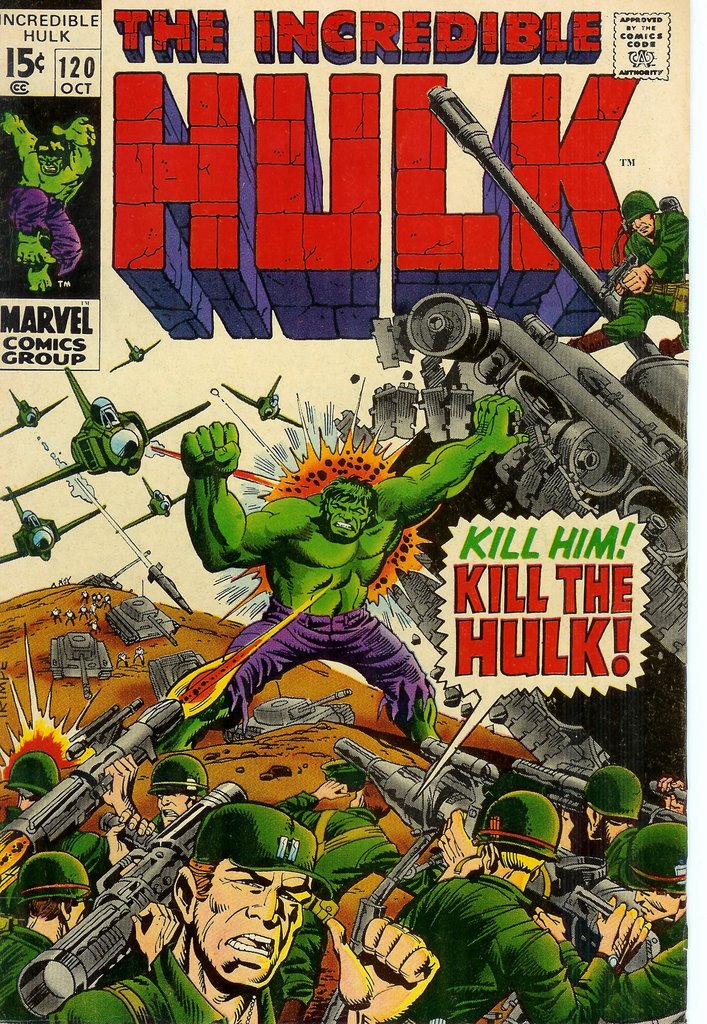
Before Ang Lee made gay cowboy movies he made such chop-socky delights as Wo Hu Cang Long (that's Crouching Tiger Hidden Dragon to most of you), and the much misunderstood and maligned Hulk. A lot of reviewers canned this movie as being either too long, not true enough to the original Marvel character, or too filled with pop psychology for its own good. Empire even had an article in a recent issue entitled "Hulk: What Went Wrong?" Well, I loved the movie, primarily because it captured for me most of the key themes of the Silver Age Hulk comics I enjoyed as a kid and still enjoy reading. (Like Hulk #120 shown further down in this entry which I recently bought on eBay). There was the setting in the American South-West, a gruff General Thunderbolt Ross, overly protective but at the same time distant from his beautiful daughter Betty, who alone could pacify the Hulk, attempts to contain the Hulk (from which of course he spectacularly escapes), and lots of tossing around of tanks and generally destructive mayhem. Even the updates were true to the spirit, if not the period, of the 60s comic. There were still gamma rays involved but the experiments were updated from nuclear testing to nanomed technology (and they still managed a mushroom cloud in a flashback sequence).

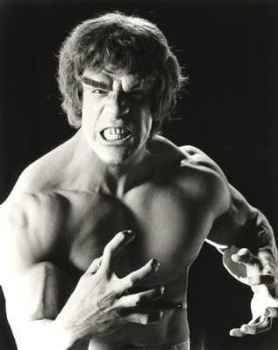
A lot of people complained about the CGI Hulk. But, hey how exactly do you depict ol' green skin accurately? A guy in a rubber suit? It certainly looked better to me than Lou Ferrigno (at left) jumping around in purple shorts in the TV series. Then there was all the pop psychology and the cosmic sequence at the end when Bruce's father David morphed into this weird creature in a final slugout with his son Bruce/Hulk. If you read a Silver Age Marvel comic however you find both these elements are quite common - after all it was Marvel who reinvented comics by focusing on the inner demons of their characters who, like us, were real people with real problems. As for far-fetched cosmic battle sequences, in which impossible to believe pseudo-science thinly explained the most way out happenings, these were in every issue of The Incredible Hulk. Listen naysayers, Ang Lee got it right! By the way, the Hulk himself agrees with me, according to his piece in The Onion, "Why No One Want Make Hulk2?"

Stan Lee says that when he and Jack Kirby invented the Hulk in 1962 he had two literary characters in mind - the monster from Mary Shelley's novel Frankenstein, and Robert Louis Stevenson's story, Dr. Jekyll and Mr. Hyde. He is created by science (Frankenstein) but he can't control his transformation from mild mannered research scientist Bruce Banner into he who "smash puny humans" (Mr. Hyde). Hulk also serves as an interesting metaphor for the sinful nature. There is something inside of us which we can't control, something that has infected our nature, not something we were created with but the result of something having gone wrong in our creator's design. As hard as Bruce Banner tries to control his hideous transformation it lies beyond his ability to eliminate. "Don't make me angry," he warns, "you won't like me when I'm angry!" For a while there was an articulate Hulk who retained all of the intellectual powers of Bruce Banner. Fans argued back and forth over whether they preferred this Hulk or the one who said things like "Hulk smash!" and "Why puny humans hate Hulk?" or simply "Aaaarrrrggghhh!" The following letter is a good example of how intellectualized comic books became in the 1960's. It comes from a 357-member strong "Hulk Cult" at the University of Syracuse, New York, and was published on the letters page of Tales to Astonish #74 (Dec. 1965). "You have just ended the most prolific era in American literature by giving the Hulk a human brain...By inculcating a rational mind into Hulk's primordial psyche, you caused the downfall of Hulk's entire reason d etre. Your recent issue can be termed a resounding victory of Schopenhauer's will to live over the forces of human nature...What you have done is merely desecrate one of the most forceful genres in modern art - the mindless Hulk. Shame, shame, that's as bad as calling Spinoza a pragmatist...We are even considering switching our loyalties to John Paul Sartre..."

In terms of the metaphor I'm proposing both dumb Hulk and articulate Hulk are appropriate incarnations. Our sinful impulses can be blind, irrational, instinctive and overtly violent. On the other hand they can be wily, crafty, clever, and sophisticated. There is only one way to reach Hulk and to tame his wild and destructive impulses. The love of Betty Ross is all that can reach him. What US government tanks cannot do; what no supervillain has been able to defeat; what no superhero who has tried to take the Hulk down has been able to achieve (most often attempted by the Fantastic Four's Thing), is achieved by the influence of love. So it is with us - the love of God alone can heal our "Hulkiness," can tame the savage breast and restore us to the state our creator intended for us. Only the grace of God can conquer the beast within us all.

Here is a close up of the Eric Bana CGI Hulk, which is actually a composite of the faces of Bana, Ang Lee, and Jennifer Connelly who played Betty Ross in the film. One of the best Hulk sites is The Hulk Library. By the way the Hulk has his own blog. Check it out!

Reblog this post [with Zemanta]

Sunday, April 16, 2006

Hell Took a Body and Discovered God

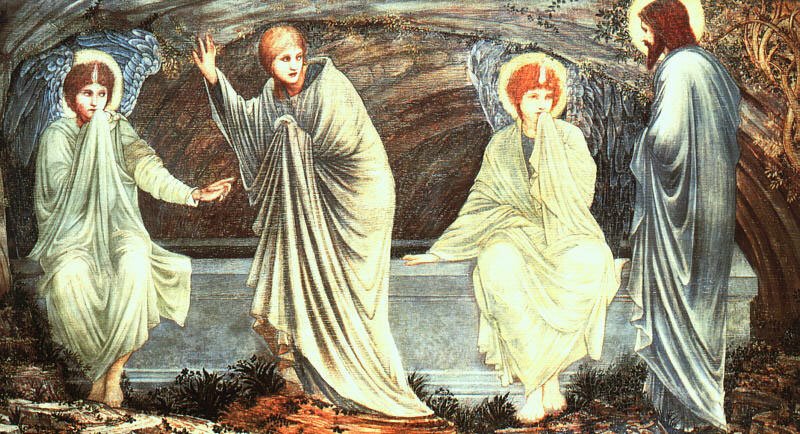
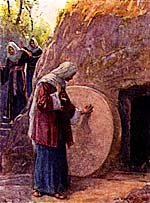
There is a big difference between “He is not here,” and “He is risen!” Mary, and Peter, and John, along with the other disciples moved in this direction in their experience that first Sunday morning (John 20:1-18). The body of the Lord was gone and it took a while for the realisation to dawn that he was in fact alive from the dead and not just a stolen corpse. They moved from a startled confusion to a settled conclusion. The moved from the real absence of Christ to the real presence of Christ.

When my daughter Sophie arrived in church on Good Friday morning she gave me a big hug, and said, “Dad, I had a dream that you had died, but you didn’t.” I’m sure we’ve all had that experience, when we woke from a bad dream and felt a surging wave of relief that the horrors we had experienced were in fact an illusion and all was well again. The disciples must have had an experience somewhat like that. When Mary saw Jesus standing in the garden alive and well - more alive and well than ever - all that had happened over the last few terrible days must have seemed an illusion - a bad dream. Now all was well again.

But they did not get to this realisation as quickly as we do. It is impossible for us to work our way back into the experience of these early disciples, because we know the end of the story. It’s like watching a grand final match on video; it’s nowhere near as exciting as watching the game in the first place because we know the outcome of the match. We try to enter into the experience of the disciples when we dramatise Easter throughout Holy Week, with our Maundy Thursday and Good Friday and Holy Saturday vigil, during which we try not to make mention of the resurrection. But as much as we try we can’t really do it, because the fact remains - we know the end of the story. They didn’t, but we do.

Hubert Beck reminds us:

Easter means nothing if we do not recognize, as did those around Jesus, that death is death in all its horrible reality. Our celebration of Easter is too often framed by an idea that the resurrection is a “springtime,” the season when it is celebrated in the northern hemisphere. Perhaps those in the southern hemisphere have some advantage..for there Easter must be observed in the fall of the year when all is moving toward winter and the browning of the earth. In [the northern hemisphere] it is all too easy to point to the return of the leaves, the blossoming of the flowers, the greening of the earth as though they were "pictures” of Christ’s resurrection. All of that is fine and dandy, except for one simple fact: The greening of the earth is not a resurrection from any death; it is, rather, a re-emergence of life in dormant plants. They enliven again, bloom for a period of time, wither and return to sleep for another winter after which they will again begin the round of lively existence and dormant waiting. Dead plants do not return to life in the spring. If they were dead in the fall, they will not live in the spring; and if they die during the winter there will be no spring for them. Dormant things are only “life-hiding,” not dead! Dead things are dead, and that is that. They will not return to life. One can only weep over them, for their laughter is gone. (Hubert Beck, “Sermon on John 20:1-18,”)

When you a buy a garden bulb it’s just a dirty looking round thing with a few scraggly roots hanging off the end of it. It already looks half dead. But that doesn’t bother you because you know that when its time comes that bulb is going to blossom into a magnificent flower. But look into the coffin and see a dead parent, a dead child, a dead wife, husband, or friend, and you know they are not coming back. They’re dead and you are never going to see them alive again. You will never talk with them again, never hear their voice again, never know their touch again. They are dead. Dead as a doornail. Dead is dead and that's all there is to it. The only spring time they’re going to know is the springtime over their graves. (The image is drawn from the sermon, “The Unnatural Truth,“ by Barbara Brown Taylor in Christian Century, 20 March 1996.)
Why am I saying all of this on such a bright and happy day as Easter? Why am I painting such a bleak picture in such dark tones? Because we have to overcome somehow this idea that the resurrection is just a symbolic representation of a natural process. It is not that. It is wholly unnatural. It is supernatural. It runs so opposite to the direction of nature that it overturns nature and institutes a new creation. Yes, this is a day of rejoicing, but not because there is a silver lining on every cloud, not because there are no valleys without corresponding hills, not because tadpoles turn into tree frogs or grubs into butterflies, but because Jesus Christ is risen from the dead!

In the fourth century John Chrysostom wrote a sermon which became one of his more famous ones and perhaps the most famous Easter sermons ever written. In it he asks:

Are there any who are devout lovers of God?
Let them enjoy this beautiful bright festival!
Are there any who are grateful servants?
Let them rejoice and enter into the joy of their Lord!
Are there any weary with fasting?
Let them now receive their wages!
If any have toiled from the first hour,
let them receive their due reward;
If any have come after the third hour,
let him with gratitude join in the Feast!
And he that arrived after the sixth hour,
let him not doubt; for he too shall sustain no loss.
And if any delayed until the ninth hour,
let him not hesitate; but let him come too.
And he who arrived only at the eleventh hour,
let him not be afraid by reason of his delay.
For the Lord is gracious and receives the last even as the first.
He gives rest to him that comes at the eleventh hour,
as well as to him that toiled from the first.
To this one He gives, and upon another He bestows.
He accepts the works as He greets the endeavour.
The deed He honours and the intention He commends.
Let us all enter into the joy of the Lord!
First and last alike receive your reward;
rich and poor, rejoice together!
Sober and slothful, celebrate the day!
You that have kept the fast, and you that have not,
rejoice today for the Table is richly laden!
Feast royally on it, the calf is a fatted one.
Let no one go away hungry. Partake, all, of the cup of faith.
Enjoy all the riches of His goodness!
Let no one grieve at his poverty,
for the universal kingdom has been revealed.
Let no one mourn that he has fallen again and again;
for forgiveness has risen from the grave.
Let no one fear death, for the Death of our Saviour has set us free.
He has destroyed it by enduring it.
He destroyed Hell when He descended into it.
He put it into an uproar even as it tasted of His flesh.
Isaiah foretold this when he said,
"You, O Hell, have been troubled by encountering Him below."
Hell was in an uproar because it was done away with.
It was in an uproar because it is mocked.
It was in an uproar, for it is destroyed.
It is in an uproar, for it is annihilated.
It is in an uproar, for it is now made captive.
Hell took a body, and discovered God.
It took earth, and encountered Heaven.
It took what it saw, and was overcome by what it did not see.
O death, where is thy sting?
O Hell, where is thy victory?
Christ is Risen, and you, o death, are annihilated!
Christ is Risen, and the evil ones are cast down!
Christ is Risen, and the angels rejoice!
Christ is Risen, and life is liberated!
Christ is Risen, and the tomb is emptied of its dead;
for Christ having risen from the dead,
is become the first-fruits of those who have fallen asleep.
To Him be Glory and Power forever and ever. Amen!

What an incredible thought - “Hell took a body and discovered God! It took earth, and encountered Heaven. It took what it saw, and was overcome by what it did not see.”

The sceptic H. G. Wells once wrote: “When I think of the Resurrection, I am always reminded of happy endings that editors and actor-managers are accustomed to impose on essentially tragic plays and novels.” I think Wells was wrong. I think he was wrong because I believe in happy endings, and Easter is the happiest ending of them all. Next week on ANZAC Day we will remember our fallen dead. “Lest we forget,” is our national motto at that time. But Robert Runcie, the former Archbishop of Canterbury, reminds us, “the New Testament never simply says, ‘Remember Jesus Christ.’ That is a half-finished sentence. It says ‘Remember Jesus Christ is risen from the dead.’”

I don’t like half finished sentences and I don’t like half finished stories. Every story has a denouement. The so-called "Lowery Loop" describes an identifiable shape to most narratives. We start with a setting, something occurs and there is a crisis, the crisis then deepens, then comes a realisation of how the situation is going to be restored, then comes the actual reversal in the situation. Finally there is the "denouement" - what happens after everything has settled. This pattern can be characterised by the words Oops, Ugh, Ah Ha, Yippee, and Aaaah. This cycle is certainly identifiable in the Easter story. "Oops," Jesus has been arrested and crucified. “Ugh,” he has died and been buried in a rock sealed tomb. “Ah Ha,” the tomb is empty, perhaps his words have been fulfilled and he really has risen. “Yippee,” he’s alive again! But where is the “Aaaah…!”? Where is the denouement? Where is the part of the story that happens after everything has settled? Sisters and brothers, you are the denouement! The denouement is in our Acts reading today (Acts 10:34-43). “They killed [Jesus] by hanging him on a tree, but God raised him from the dead on the third day [and now we are here to announce that] everyone who believes in him receives forgiveness of sins through his name.” This our Easter proclamation today: “Forgiveness has risen from the grave.”

There is the denouement of the story. The New Testament itself and the believing community are the ongoing outcome of these tremendous events. The message of Easter is not only that Jesus has risen but that those who believe in him are also risen with him and constitute a new type of community - the community of the resurrection. Paul told the Ephesians that they were raised up with Christ and seated in heavenly places (Ephesians 2:6). He told the Colossians “When you are buried with him in baptism, you were also raised with him through faith in the power of God, who raised him from the dead.” (Col. 2:12). Paul wrote in the epistle for this week, “This is what we preach, and this is what you believed.” (1 Corinthians 15:11). What the apostles saw, they preached, and what they preached you and I believed, so you and I are the denouement of the story.
Consider for a moment the impact of the resurrection. The religious authorities were greatly disturbed, violence erupted in city streets, persecution that lasted three centuries ensued. Steven was stoned to death. The believers in Jerusalem were scattered. King Herod arrested Christians, executed James and imprisoned Peter. In Iconium, the people of the city were divided at the message of the resurrection. In Lystra, Paul was stoned and left for dead. In Philippi, he was imprisoned for “throwing the city into an uproar.” Riots broke out in Thessalonica and people complained that the disciples had “caused trouble all over the world.” The people of Athens sneered at Paul’s preaching of the resurrection. Rioters opposed Paul and his colleagues in Ephesus and there arose a great disturbance about the Way.” In Jerusalem Paul had to appeal to his Roman citizenship to prevent his being mobbed to death , but he was arrested there, and just like his Master, from that point on his fate was sealed. Festus, Roman governor of Judea under Nero was totally at a loss to know what to do with his prisoner. “They did not charge him with any of the crimes I had expected. Instead, they had some points of dispute with him about their own religion and about a dead man named Jesus who Paul claimed was alive.” The next day when Paul gave his defence Festus interrupted and said, “You are out of your mind, Paul! Your great learning is driving you mad.” So when H. G. Wells and other famous sceptics scoffed at the resurrection, as people still do today, it really wasn’t anything new.

Can we move today from “He is not here” to “He is Risen”? Can we move from startled confusion to settled conclusion? Can we move from the real absence to the real presence of Christ? Can we move from the fear of hell to seeing hell in an uproar because it has been overthrown? Hell took a body but discovered God! It took earth, and encountered Heaven! It took what it saw, and was overcome by what it did not see! Christ is risen! He is risen indeed!

Spring Street Wesleyan Methodist Church
Easter Sunday 2006

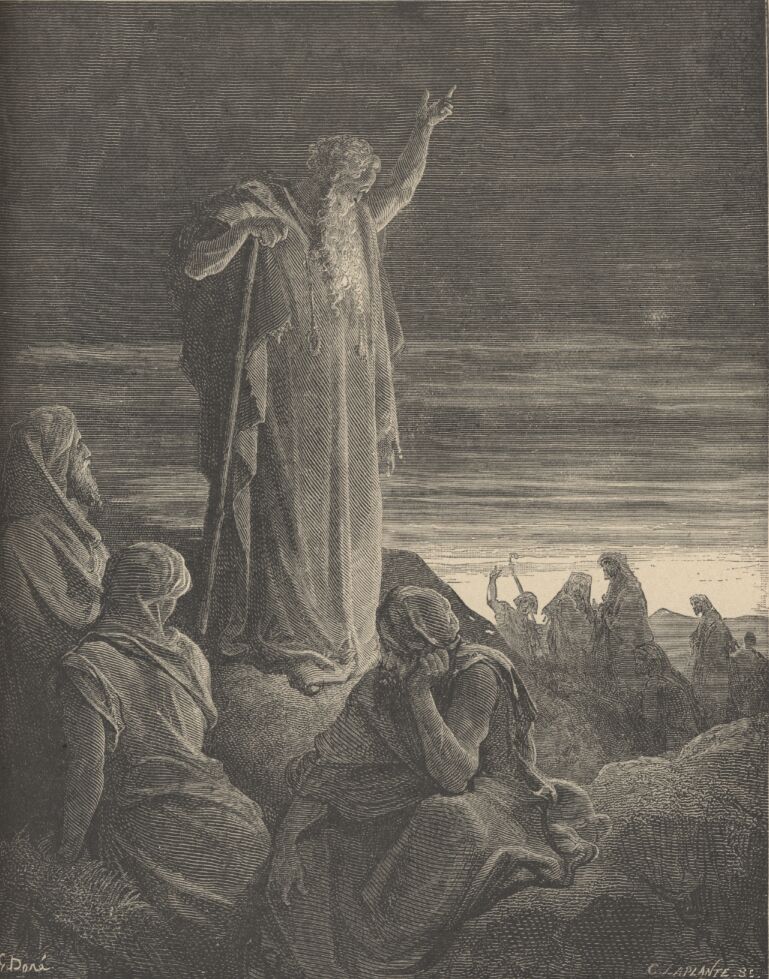
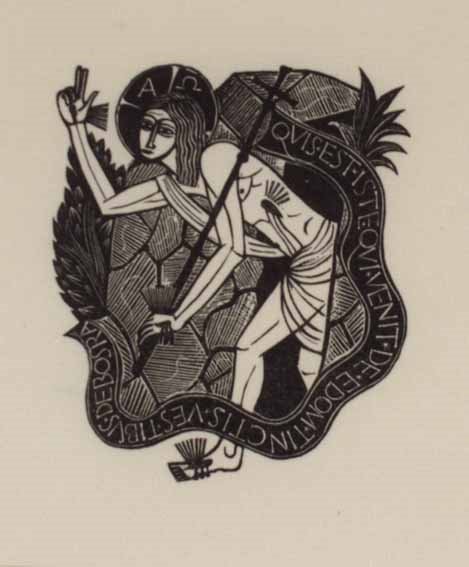
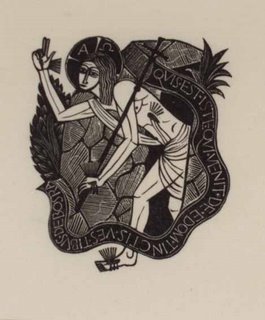
The final image on this blog entry is by Welsh artist David Jones "The Resurrection of Christ (from the Book of Jonah)" wood engraving 1926 8 x 7.5cm www.artwales.com

Wednesday, April 12, 2006

"Remember, Remember, the Fifth of November"

I saw V For Vendetta last night with the Boy Wonder and Wisdom88. It's a corker. Best film I've seen this year no contest. How can the Warchowski brothers write two such great screenplays as The Matrix and this and churn out two absolute duds in between? Maybe it was the Aussie director on V that made the difference. It's Orwell, it's Brave New World, it's Bush's America, it's Thatcher's (and Blair's) England, it's the English Revolution, it's Anarchy in the UK, it's Zorro, it's the Phantom of the Opera and it's all rolled into one two and a half hour cinematic bundle. Why the original author of the graphic novel doesn't like it, I'll never know (it's way better than the last attempt to film one of his creations - The League of Extraordinary Gentlemen). OK, so it's propaganda for the Left but hey, haven't we been swamped with enough from the other side? Do yourself a favour and go see it.

Thursday, April 06, 2006

Bring the Troops Home

America is stuck with 100,000 troops in a very ugly war in Iraq which shows no sign of letting up anywhere soon, and seems likely to become a full blown civil war before much longer. "Blowback" is a term first coined by the CIA to refer to the internal domestic chaos caused by their covert operations, and now being used in reference to the overt miltary invasion of Iraq. That "blowback" in Iraq is spinning completely out of control is clear. According to Gary Dorrien at Union Theological Seminary and Columbia University, even though the US is estimated to be killing 2000 insurgents a month, between April 2003 and April 2005 the insurgent population grew from 5,000 to 19,000 fighters! Added to this, the Sunni population supports the insurgents, Sunni and Shi'ite are at each others throats, Sunnis being particuarly angry that their persecutors, the Shi'ites, are collaborators with the US invaders, and so the Sunnis are increasing the number of their militia death squads to counter Sh'ite ones against themselves. According to the Washington Post, Iraq is attracting more and more foreign terrorists. Even the oppressed Kurds are getting more radical in demanding posession of Kirkuk an oil-rich area that Saddam populated with Arabs through forced migration.

The Americans made a big mistake invading the country in the first place. There were no weapons of mass destruction and Iraq had nothing to do with 9/11. They got Saddam Hussein and now he sits in an Iraqi court and mocks the whole process! No one would argue that ridding the country of a dictator like Saddam was a desired end. But it was an Iraqi problem that they should have been left to sort out on their own with diplomatic pressure from foreign powers not firestorms. Why doesn't the US just cut its losses and leave? Dorrien believes that the continued US presence in Iraq is bolstered by an imperialist ideology and may only be the first of other first strikes on other non-democratic states (Bush has already brandished his sword over Syria, Iran, North Korea, and even Saudi Arabia and Pakistan).

"The aggressively interventionist ideology that guides the Bush administration and the neoconservative wing of the Republican Party goes by several names: unipolarism, global dominion, American Greatness, liberal imperialism, full-spectrum dominance. Begining as an especially militant form of anti-communism, it morphed into a vision of global empire after communism collapsed. It trades on the historic American myths of ionnocence, exceptionalism and manifest destiny, and offers a vision of what the United States could do with its unrivaled global power. In its most rhetorically seductive versions, it conflates the expansion of American power with the dream of universal democracy." (Gary Dorrien,"Nightmare in Iraq," Christian Century (4 April 2006), 38.) After 9/11 this ideology grew more aggressive. Apocalyptic militarism sees the war in Iraq as a holy war between two competing civilizations, one of which must triumph if the world is to be saved. If this is the case then God help us because no one could ever win such a war.

When pressed on the blowback problem Bush has replied like a schoolboy, saying in effect, "They started it, not us." "We didn't ask," he says, "for this global struggle but we're answering history's call with confidence and a comprehensive strategy." (Dorrien, 40) I don't know about you but that kind of cowboy politics makes me very nervous. Look, this isn't an anti-American post. I'm not anti-American in my outlook. I love Americans, many of whom I count as dear friends. The US is a beautiful country with a magnificent history that has made significant contributions to the betterment of the world. I don't enjoy the cheap-shot antiAmericanisms that Australians often trot out just because of their own cultural inferiority complexes. All I am saying is enough is enough. Please Mr. Bush end this madness in Iraq. Bring the troops home(you too Mr. Howard) Stop the killing. Admit your mistake. Humble yourself before God. All of us will have to answer to God for the way we have lived our lives. It's not too late to repent and withdraw from Iraq.

Wednesday, April 05, 2006

This Office Opposes the War in Iraq

A lot of people don't know that John Wesley was a pacifist. He could not see how Christianity could possibly be compatible with war and he saved some of his most stinging criticisms for so called Christian countries who went to war against their enemies or (as was most often the case in his day) against each other. In Sermon 22 of his Standard Sermons, Upon Our Lord’s Sermon on the Mount Discourse II he recalls how the pagans once observed of the early Christians, “See how these Christians love one another!” But would they say the same thing today?

“These Christian kingdoms which are tearing out each other’s bowels, desolating one another with fire and sword! These Christian armies, that are sending each other by thousands, by ten thousands quick into hell! These Christian nations that are all on fire with intestine broils, party against party, faction against faction! These Christian cities, where deceit and fraud, oppression and wrong, yea, robbery and murder, go not out of their streets! These Christian families, torn asunder with envy, jealousy, anger, domestic jars, without number, without end! Yea, what is most dreadful, most to be lamented of all, these Christian churches! – Churches (“tell it not in Gath” – but alas, how can we hide it, either from Jews, Turks or pagans?) that bear the name of Christ, the Prince of peace, and wage continual war with each other! that convert sinners by burning them alive! that are “drunk with the blood of the saints!” – Does this praise belong to [the Roman Catholic Church]? Nay, verily; but reformed churches (so called) have fairly learned to tread in her steps. Protestant churches too know [how] to persecute, when they have power in their hands, even unto blood. And meanwhile, how do they also anathematize each other! Devote each other to the nethermost hell! What wrath, what contention, what malice, what bitterness, is every where found among them, even where they agree in essentials, and only differ in opinions, or in the circumstantial of religion! Who follows after only the ‘things that make for peace, and [which] edify [others]? O God! How long?” ''

He then closes with a positive exhortation (I'm paraphrasing now). Fear not little flock. God will eventually put an end to all war and religious strife. All people will love as God loves and be made perfect at last. Even though that day hasn’t come yet, be part of the first fruits of that harvest now by loving your neighbour as yourself and ask God to fill your heart to overflowing with such love until “every unkind and unholy temper” is swallowed up in love!

Leaders of the "free world" take note. God puts you on notice - Love your enemies, don't bomb their countries and burn them to a crisp.

Thursday, March 23, 2006

The Magic of the Black Disc

A friend emailed me recently and said that he had just purchased Bob Dylan's Planet Waves. It just so happened that I had been listening to a track from it that morning on my iPod ("Tough Mama"). I told him how those lines "Dark beauty / with a long night's journey in your eyes" and "with the badge of the lonesome road written on your sleeve" get me every time, and the way he sings them! There's something visceral about Bob's songs. In some kind of sub-rational way they just hit ya where ya live! My friend is doing Masters work in multi-modal therapy at the moment, liked my use of "visceral" and told me how his studies were moving him away from "the rational only [not irrational]...to a total experiencing...visceral is a good word...so descriptive....so...visceral...I havent got into ipods and probably wont....love my cd collection too much...love the fussing around with the cd's and ancient cd technology...so visceral." Well the use of an iPod hasn't superceded my use of and love for CDs. (Man, I still use vinyl!) Both CDs and vinyl records are objects of beauty in themselves and things I could never replace in my life. It's just that the iPod gives me portability and I love the shuffle function which keeps me guessing about what's coming up next. I've come to the realization that I love these objects because they are magic. When as a child I took a solid black vinyl disc and placed it on a spinning turntable, music came out of it for no reason that I could explain. I didn't understand or need or want to understand the technology behind the magic. The wonder of the music carried its own explanation. The CD revolution gave me the same experience without lessening my love for the magic of the black disc. Ditto for the iPod and the CD.

Tuesday, February 28, 2006

Visioneer Films


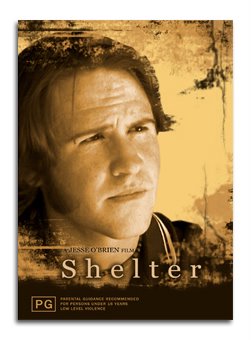
You can now view the Boy Wonder's (my son Jesse's) short films A Night of Fowl Play, Shelter, and The Waiting Room at www.visioneerfilms.com
You can view these with Quicktime in High Medium or Low resolution. Check 'em out. They're good (admittedly I'm biased), and leave a comment.

Wednesday, February 22, 2006

Whether God Exists

I've been part of an interesting discussion on Dboy's Steaming Pile of Blog about the existence of God. In fact Ludicrousity and I along with a group of about 30 others are discussing the existence of God right now in class at Kingsley College. I've read (or at least scanned through) all the posts (all 46 of em!) and it's been a great discussion.

Master Peebody has said that maybe he could believe if God came down out of the clouds and shook his hand thus removing any doubt about his existence. In one sense God HAS come down out of the clouds and shaken our hands. At least that what Christians believe is the meaning behind Jesus Christ's entry into the world. He is God in the flesh - who became human so that we could see, touch, and know experientially what the otherwise unknowable and invisible God is like. Remember the old song? "What if God were one of us? Just a slob like one of us?" (Okay, now I'm showing my age.) Of course, that's not quite the same as what Master Peebody is looking for, but it's about as close as we're going to get. (Even then, as someone else rightly posted), some people in Jesus' day saw his miracles and even his resurrection but still would not believe.

I'm not saying what follows is the case with Master Peabody who I don't know other than from his posts and from those he seems like a nice guy asking some of the most important questions a person can ask. But it's true of SOME people that the intellectual objections they put forward are not real objections at all but a mask for a deeper set of problems, i.e. moral and ethical ones. You see if I say I believe in God my life has to change. If I say I believe that Jesus is the Son of God I then have to take seriously the fact that he wants my life. He wants to be the Lord of my existence and human pride finds that hard to give up. "Darwin has disproved God" can often simply mean, "I don't want to give my life over to my Creator."

Finding watertight proofs for God's existence is a fool's project because there simply are no undeniable, unassailable, take it to the bank, proofs. (There are of course very strong evidences, but they are in the nature of circumstantial rather than forensic evidences.) There are other ways than intellectual proofs to approach this problem however. C.S. Lewis suggests a little thought experiment. Close your eyes and think about the world we currently live in with all that it contains and ask yourself whether it makes sense, whether it offers up any kind of ultimately satisfying meaning. Now open your eyes, and mentally erase that picture. Close your eyes again and imagine the same world but this time imagine it AS THOUGH CHRISTIANITY WERE TRUE. Now, does it seem to make more sense? Does it now seem to offer up a greater purpose to existence? Lewis thought it did and I agree with him. There is a deep magic at the heart of this world if we can only imagine our way (and I don't mean "fantasize" - there's a difference) into the reality of it.

The bottom line is Christians do not claim to have ALL the answers to life's questions. They only claim to have the best set of answers on offer. That's good enough for me.

Monday, February 06, 2006

Quest for the Code

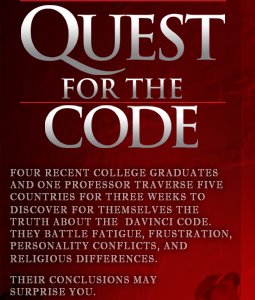
Jesse has an Assistant Editor credit on a film about the Da Vinci Code phenomenon called Quest for the Code. You can visit the website and see an interesting trailer. It's a "reality show" approach that brings together four American college students of varying religious viewpoints who are on an investigative trip to places connected to the Da Vinci Code mythology. Look for a link here soon to Jesse's website that will feature online viewing of his short films.

Tuesday, January 31, 2006

Holiday Reading

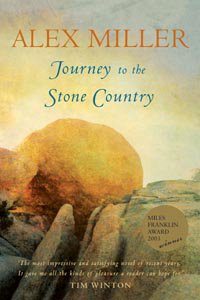
We spent four days in Bright last week, our usual sub-alpine summer holiday destination. This year we decided to stay in a cabin instead of camping, which was more expensive but less work. It wasn't quite the same however as you tend not to spend as much time out of doors. There was a fire ban on the first day of arrival but we did manage a nice campfire on the second night. I've got some nice pictures but for some reason I'm having trouble uploading them. I could, however upload the cover image of Alex Miller's Journey to the Stone Country winner of the 2003 Miles Franklin Award which segues nicely into my holiday reading report. Miller's novel, set in far North Queensland, functions as a kind of metaphor of the tenuous relationship between black and white Australians. Childhood friends Bo Renney of the Jangga tribe and Melbourne academic Annabelle Beck, recently returned to her ancestral home after a marriage bust-up, forge a new relationship based on a realistic view of their shared history. Once having stared into the face of the violence between their two families in the past they are able to set their sites on a possible shared future. The narrative drags a little in the middle section but the latter half of the book is particularly moving as both of the protagonists make discoveries about their past that force them to rearrange their present. I was attracted to the cover because I have always felt a kind of connection of some sort to monoliths. My friend Gerard Goldman at the Broken Bay Institute tells me it's part of my dreaming. Maybe so.

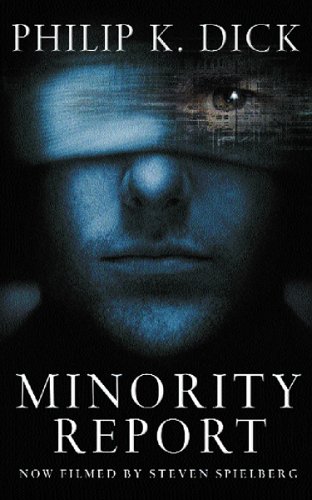
From the past to the future, I enjoyed a collection of science fiction short stories from Philip K. Dick under the title of Minority Report, no doubt to cash in on the Spielberg movie of the same name. I had read two of the stories already, the title story and "Second Variety" in another collection of stories loaned to Jesse by Jon Case - The Variable Man. Quite a few of Dick's stories, apart from "Minority Report," have been filmed. "We Can Remember it For You Wholesale" became Total Recall, "Do Androids Dream of Electric Sheep" became Ridley Scott's Blade Runner, "Paycheck" became John Woo's Paycheck, and "Second Variety," which Jesse and I thought would make a good short film, became Screamers written by Dan O'Bannon (he of Alien and Dark Star fame) - beaten to the punch again Jess. These are pretty engrossing stories. Some, like "Oh, to Be a Blobel," about a human who involuntarily tranforms into a blob-like creature, after having fought a battle with this species on the other side of the galaxy, seem like the prose equivalent of a Silver Age Marvel comic (not that there's anything wrong with that). Others like "The Electric Ant" are chilling meditations on the nature of identity - does a cyborg with programmed memories fear extinction if his memory tapes are arranged? If it does fear extinction it must have consciousness. Is it therefore a "person" with a "soul"? Science fiction writers are often credited with anticipating future technology. What strikes me about these stories however is how they fail on that point. These stories, written between 1953 and 1969, do not seem to have anticpated digital technology at all - everything is on tapes and computers are still huge devices housed in separate buildings!

Finally, I have almost completed a book my daughter Ellen recommended to me. First They Killed My Father: A Daughter of Cambodia Remembers by Loung Ung tells the horrific tale of the survival of a young Cambodian girl whose middle class educated family members are targetted by the Pol Pot regime as enemies of the state. It's a harrowing first-person account of one of the worst incidences of genocide from that most bloodthirsty of centuries - the 20th.


Thursday, January 05, 2006

2005 at the Movies

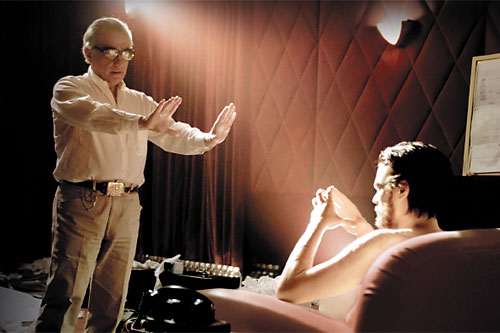
(left: Martin Scorsese directing Leonardo DiCaprio in The Aviator).

Around this time last year, My son Jesse and I decided we were going to see all of the Academy Award nominated films and took ourselves off to Tuesday cheap nights until we had seen them all. These were made in 2004 and are all now available on DVD, but we didn't get to see them till early 2005. It was a mixed bag. Okay, we all know that Academy Award-nominated films are not necessarily the best films of the year (Shawshank Redemption lost out to Forrest Gump in 1994.) Not every actor who wins an Oscar necessarily deserves one either (Gwyneth Paltrow and Halle Berry both have one). Still, it's a fun guessing game on the night and we'd sat through too many awards ceremonies thinking, "never heard of it," to do that again. Well, its history now, but Clint Eastwood's Million Dollar Baby took the honours. It was a worthy follow up to Mystic River which for sheer drama was a superior piece of work. All the leads, including Clint himself looking positively skeletal in his old age, Morgan Freeman, and Hilary Swank, put in fine performances. The euthanasia ending was contrived and unnecessary and also departed from the real story that F.X. Toole's short story was based on. The real life character went on living - a more heroic option.

Ray was an entertaining biopic that covered the darker side of Ray Charles with his drug addiction and marital infidelities. The best parts of the film were the musical segments and Jamie Foxx's eerily realistic portayal of Ray. I had the joy of seeing Ray Charles perform live a few years ago here in Melbourne at the International Blues and Music festival shortly before he died (yes, we had music and blues!), and I knew I was seeing a legendary performer.

Finding Neverland was an interesting portait of the playwrite J.M. Barrie, author of Peter Pan. Johnny Depp puts in an unusually subtle and subdued performance as Barrie and Kate Winslett played the mother of the children he befriends with her usual ability. It was refreshing to see a film about a relationship between a man and boys that was genuinely "nothing 'sus." Freddie Highmore (along with Dakota Fanning), is the best child actor working today and when his eyes fill with tears at the end of this one it's hard not to be affected.

The film we liked least was Sideways. Morally reprehensible characters are hard to like, especially if they have no redeeming features. Paul Giammatti (who plays Miles) is a good actor and his character is a little more sympathetic but Thomas Hayden Church's "Jack" is a complete loser who decides he's going to "enjoy" one last dirty weekend by having sex with strangers before he gets married. The dialogue is crude and Jack's behaviour adolescent. It's like National Lampoon for "grownups" which believe me is anything but grown up. Miles is the film's conscience with his disapproval of Jack's stupid behaviour and his hangdog demeanour throughout the film does bring forth some sympathy. It was well scripted and had its reflective moments. I just don't think it was an Oscar-worthy film.

Our personal favourite was Scorsese's The Aviator and it was a bit of surprise to see it fail to take out either the coveted Best Picture or Best Director awards, as it's the sort of film the Academy tends to favour (big scale flms about the American myth), and the much dissappointed Marty was due for at least a sympathy vote. Leonardo DiCaprio suffers from being thought of as a bit of a matinee teen idol, but in fact I think he is an underrated actor who has put in some fine cinematic performances, and this is one of them (perhaps his best). His depiction of Howard Hughes' descent from boisterous and boyish enthusiasm into madness is brilliantly accomplished. Cate Blanchett also shines as Kate Hepburn. Jesse and I always enjoy movies about movies and a considerable amount of The Aviator deals with Hughes' forays into film making. (He made the WWI fighter plane movie Hell's Angels, the steamy western The Outlaw and the original Scarface.) The aerial sequences are brillantly shot and the entire set design recaptures the early twentieth century ambience well.

Hotel Rwanda was not nominated for Best Picture but was the "worthiest" film of the year, in the sense that it had the keenest social conscience and was a slap in the face to the U.S., the U. N. and the rest of the world as they stood by and did nothing during the Rwandan genocide of 1994. Christian references appear throughout the film (Paul Rusesabagina's wife, played by Sophie Okenedo, conspicuously wears a cross, a priest and nuns are seen refusing to leave their Rwandan friends when the evacuation of all whites gets underway.) But the person acting in the most Christian way is Rusesabagina himself (Don Cheadle), who performs a series of self sacrificial acts in order to protect the lives of the innocent. Lt. General (ret.) Romeo Dallaire (the character played by Nick Nolte) has written a book about his experiences called Shake Hands with the Devil: The Failure of Humanity in Rwanda. You can read an interview with him about his experiences at the website of the Carnegie Council of Ethics and International Affairs.

Jesse will still be in the US for this year's Academy Awards so it won't be as much fun this year. Other films we liked in 2005 - The Proposition and King Kong (both reviewed elsewhere on this blog), Batman Begins, the best depiction of the Dark Knight yet (including Tim Burton's), and War of the Worlds, another great addition to Spielberg's canon of work (and a much-needed recovery after The Terminal). Films I didn't like - Wolf Creek. It' s just too sick in its violence. We didn't walk out of the cinema but I can understand why a lot of people did. Jesse's comment afterwards about John Jarratt's serial killer - "I just don't feel comfortable living under the same sky as a person like that." Sin City I actually did like because of its ground breaking comic book style and its film noir ambience but again it was the sicko violence that didn't appeal to me and the totally gratuitous nudity that added nothing to the story. George Romero's Land of the Dead was boring, unimaginative and cliched, especially for someone who's supposed to be a zombie movie master (both Shaun of the Dead and the low-budget Aussie flick The Undead, made for half the cost, were superior). The best Aussie fright flick was Lost Things which managed to make the beach in broad daylight seem like a scary place. One to watch for - Jesse O'Brien's movie about a mother and toddler's fight to survive against zombies on a suburban Melbourne train. So far it's only an idea - are there any investors out there?

PS For interesting theological reflections on the horror genre see Bryan Stone, "The Sanctification of Fear: Images of the Religious in Horror Films," Journal of Religion and Film Vol. 5, No. 2 October 2001 and Brian Godawa's "A Theology of Horror Movies."

Wednesday, January 04, 2006

iPod Therefore I Am

Apologies to Dylan Jones for the use of his inspired book title. What has been on my iTunes list this past year and (at least since October) on my iPod shuffle?

Wilco's A Ghost is Born continues to convince me of Jeff Tweedy's genius. Though the most experimental of Wilco's albums to date this album is still brimful of startlingly good melodic hooks and inspired instrumentation. It's just that none of it follows a standard song format. (No verse, chorus, verse, chorus, bridge, chorus, close here). "I'm A Wheel" has incredible drive and for some reason reminds me of trips to the Speedway at the Sydney showgrounds when I was a kid. Something to do with the sheer rock and roll energy of the thing. Anyone with enough audacity to rhyme "1, 2, 3, 4, 5, 6, 7, 8, 9" with "one time someone in Germany said 'Nein!'" and pull it off as though it makes some kind of sense has to have something going for him. In "Theologians," Tweedy sings, "Theologians, they don't know nothin' 'bout my soul." This has a tendency to put one in one's place. Then again, he goes on to sing, "I'm an ocean of emotion / I'm a cherry ghost,' so maybe theologians could tell Tweedy a thing or two.

It's good news that there is now finally an ITunes Australia store. However, for Dylan fans it's a big disappointment as there's virtually no Dylan to be had. One little gem I did discover was Dylan's cover of Jason Wade's "You Belong To Me" from the Natural Born Killers soundtrack. The vocal style and instrumentation sounds like Dylan's World Gone Wrong and Good As I Been To You but the song itself is better than most of the songs to be had on those mediocre outings. Also Dylan's cover of "I Can't Get You Off Of My Mind" from the Hank Williams tribute album Timeless is a wonderful little slice of rockabilly.

I found a CD single in an OP Shop of Tom Waits' "Make It Rain" from the 2004 album Real Gone. It's a tortured prayer from a broken heart, a desperate cry to the heavens.


I want to believe
In the mercy of the world again
Make it rain, make it rain!

I'm not Able, I'm just Cain
Open up the heavens
Make it rain!

I'm close to heaven
Crushed at the gate
They sharpen their knives
On my mistakes

What she done, you can't give it a name
You gotta make it rain
Make it rain, yeah!

The portrait of Waits shown here is from Heidi Baracks' Red Series You can read an interesting review of this album by Zeth Lundy on Pop Matters.

The Diary of Alicia Keys has confirmed Alicia's status as the new Aretha Franklin. Revisiting Joni Mitchell's Blue after a 20 year absence has been a revelation. Gillian Welch has still not topped Time the Revelator. Two albums from Frank Sinatra (In the Wee Small Hours and Songs for Swingin' Lovers) have helped me "get" what Time magazine meant by announcing him the entertainer of the century. Johnny Cash's American IV The Man Comes Around, including his version of Trent Reznor's "Hurt" was a magnificent swansong album for "Johnny of the Cross." Next blog entry: Best films of 2005.

Sunday, January 01, 2006

New Year's Day Sermon (Hebrews 11)


We have just lived through the 365 days of 2005. Enoch, one of the heroes of faith recorded in Hebrews chapter 11, lived for 365 years (Gen. 5:23). He walked with God all those years - one year for every single day we have just lived in the last calendar year, and then he simply “could not be found” for God took him away.

Well, we are all still here. God has not taken us away yet and unless he does so this year we have another 365 days to live through before next New Year’s Day. How will we live those days? As people of faith? As those who belong to the great list of heroes of the faith given here? Will we face our trials with faith and courage as our ancestors did or will we shrink back?

What is faith anyway? It’s defined for us in verse 1 - “Now faith is being sure of what we hope for and certain of what we do not see.” Faith is the substance (the Greek word is hypostasis) of what we hope for. It is the “title deed” of things hoped for. (F.F. Bruce, The Epistle To The Hebrews, 277.) If I have the title deed to a property, though the deed itself is not the property it is a guarantee of my possession of that property. In the same way our faith is a title deed to what God has promised.

Verse 6 gives us a bit more content and helps us to understand exactly what are these invisible things of which a person of faith is so certain. “Without faith it is impossible to please God, because anyone who comes to him must believe that he exists and that he rewards those who earnestly seek him.” We are people of faith then, not only if we believe in God but if we believe that he is a rewarder of those who seek him.

I like the way J. B. Phillips renders this verse - “The [one] who approached God must have faith in two things, first that God exists and second that it is worth a [person’s] while to try to find God.” A person of faith is a person who knows it is worth while to seek God and then having found him to live for him. As the great stories of the ancients demonstrate in this chapter, faith is not mere belief. Belief is a passive thing, whereas faith is active. I believe that 2 + 2 equals 4 but I can’t get very passionate about that. Faith on the other hand is a living and acting confidence in the invisible God. It involves a willingness to act as though living for God is a worthwhile proposition, as the great stories of the heroes of the faith given here make clear.

The writer of Hebrews draws his examples from across the entire range of the biblical story. He begins with creation in verse 3, “By faith we understand that the universe was formed at God's command, so that what is seen was not made out of what was visible.” He then goes on to characters from the Book of Genesis - Abel, Enoch, Noah, Abraham, Sarah, Isaac, Jacob, and Joseph (in verses 4-22). He then moves right into Exodus with Moses, the Deliverance from Egypt, and the crossing of the Red Sea in verses 23-29). Then it’s into the historical books from verse 30 on with the story of Jericho, Rahab, and then Gideon, Samuel, Samson, and David.

These are all people who thought it worthwhile to seek God and having found him to live for him. They walked with the same God we do. Joseph Hart’s eighteenth century hymn makes this clear:

The God who created the skies,
The strength and support of the saints,
Who gives them all needful supplies,
And hearkens to all their complaints:

This, this is the God we adore,
Our faithful, unchangeable Friend
Whose love is as large as His power
And neither knows measure nor end.

Not only did these ancients live as people of faith they also died as people of faith. “A church had a bulletin board decorated with pictures of soldiers who had been killed in service to their country. A little boy was looking up at the board when the pastor came up. He asked the little boy how he liked the board. The boy asked what it was about. The pastor explained that the pictures were the men from their church who had died in the service. The little boy said, “The morning service or the evening service?” Verse 13 tells us "All these people were still living by faith when they died." The people listed in Hebrews 11 died in the service of God. They lived faithfully and they died faithfully.

“Some were tortured and refused to be released so that they might gain a better resurrection.” This may well be a reference to the Jewish martyrs written about in the apocryphal book 2 Macabbees. Eleazar the faithful High Priest was tortured (the Greek verb strongly suggests the rack), and then his mother and seven sons were all tortured confessing that no matter what was done to their bodies they would get better ones at the resurrection. They could have allowed themselves to be released from their imprisonment and suffering but they had a better and more lasting release in mind that allowed them to endure their suffering with seemingly superhuman patience.

Those who were said to have “wandered in deserts and mountains, and in caves and holes in the ground” maybe also be the Maccabean martyrs who hid in caves from the armies of Antiochus Epiphanes and refused to defend themselves on the Sabbath Day and so were cruelly slaughtered. If so then our writer has taken us from Abel right through to the very edge of the arrival of the Messiah onto the scene. He has given us a potted history of the world up to that time.

It is clear from this list that some of the heroes of faith escaped martyrdom while others did not. Yet they were still heroes of faith either way. Elijah escaped the sword of Ahab and Jezebel but Elisha lost his life. Jeremiah was delivered from Jehoiakim but his fellow prophet Uriah was slain by Jehoiakim. Herod Agrippa I killed James the brother of John with the sword but Peter escaped the same fight. “By faith one lived by faith another died.” So it’s not that faith delivered people from their trials but faith was the quality with which they faced their dangers regardless of the outcome.

I like that story about the family getting ready for a trip for the first time to Disneyland the next day. That evening as the Dad was putting his son to bed, the boy hugged his father’s neck and said, "Dad, thanks for tomorrow."... People of faith are those who can thank their heavenly father for things not yet experienced but certain because promised.

Wednesday, December 28, 2005

King Kong - Peter Jackson Does It Again


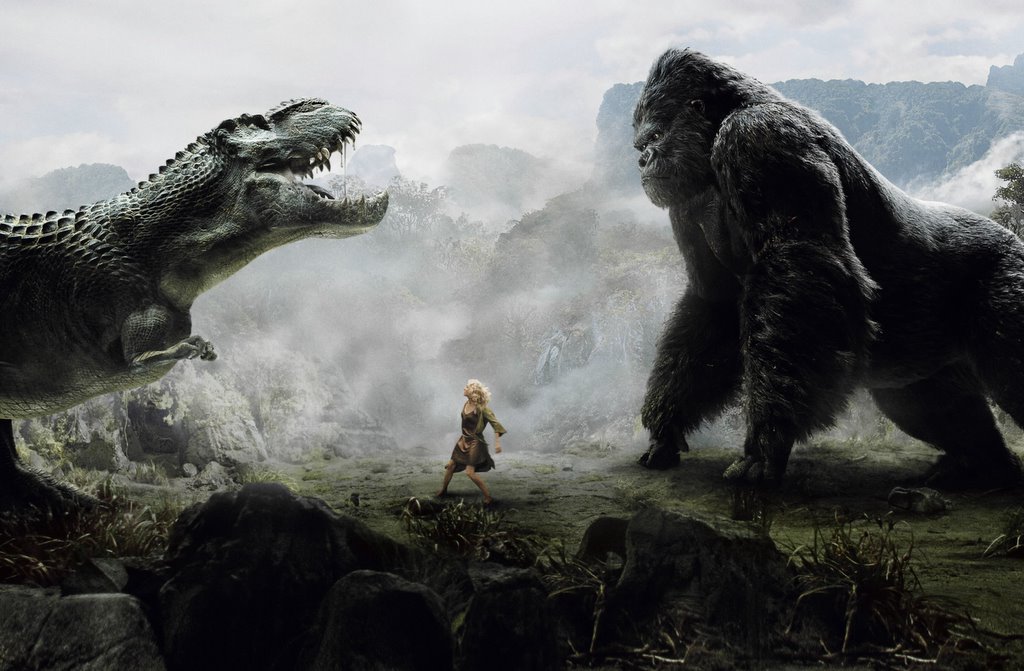
On Boxing Day I took the family to see King Kong. It was an absolute roller-coaster ride of an action movie and a worthy follow up to the Rings trilogy for our little Kiwi friend (thank God for the Peter Jacksons of this world.) Okay the dinos didn't break any new ground visually (there really hasn't been any advances on that score since Jurassic Park) but the way the scenes with them were shot - the editing, for example in the stampede scene and in the 10 minute triple-Rex brawl, was really first rate. The way Ann Darrow (Naomi Watts) was shot (cinematically that is) while she was being carried through the jungle in Kong's grip at a blistering pace really reproduced what such a ride would be like for a real person, not just for a barbie doll kind of prop. I found the exposition in the first half hour to drag a bit, but still it certainly had interesting elements. But once they hit Skull Island (what a great landing scene!) it was eye-popping action all the way. (But hey what happened to that great scene in the trailer where they're filming on the beach, Ann screams and Kong roars back in reply? It didn't seem to make it into the final cut - I guess it'll be on the [extended cut?] DVD).

The way the crew had to deal with one nasty creature after another without much of a letup at all was great and actually quite reminiscent of the original which had very similar pacing. The bug creatures were the most interesting (and gruesome) new element but I think I would have preferred pterodactyls to giant bats in the rescue of Ann scene. I loved all the references to the original. When they're looking for a female lead they complain because "Fay" (presumably Wray) is unavailable because she's "doing a picture with RKO." When they're still on the ship and doing some screen tests Ann and her male lead recite exactly the lines actually spoken in the original (corny overacting and all). When they're in New York the natives in the stage show are wearing the same costumes and makeup as the natives on the beach in the original.

The impression given by the trailer that Jackson was going to follow the original VERY closely was misleading because there are enough original touches to make it a departure in a lot of ways, while still being an obvious homage (some of the dialogue was word-for-word from the original - which I thought was cool to watch for eg, "It wasn't the planes but beauty killed the beast.") Giving more dimension to the captain and crew members of the tramp steamer was good and made their deaths (for example the black guy who had befriended the young thief) more involving. Turning Jack Driscoll (Adrian Brody) into a playwrite and developing the romantic element more was a good move. Casting Jack Black as Carl Denham was a stroke of genius because he is perfect in the role - a scoundrel but a likeable one.

The most talked about development from the original is the way the relationship between Ann and Kong is more developed and I think this is handled well. It isn't sexual (eeeew!) or even romantic, but more platonic. The moment after the battle with the T. Rexes when she realises she is safer with Kong than without him is great. She sympathises with this magnificent creature (after all he's just defending his turf). He's the last of his kind (you'll notice a few gorilla skulls in Kong's lair, indicating that there were once other Kongs [he had to have come from somewhere] but that these had all died and he was the last of his tribe). Some have said the original had a sub-text of the white man's fear of the savage black man violating the purity of white women. Whatever may be said of that thesis, that's definitely not what's going on here. This is more about how there can be profound relationships between different species (any pet owner knows this) and also about how human beings either act in fear toward other animals or in entirely exploitative ways. (If we can't make a buck out of this creature we'll kill the thing and have done with it.) There's some interesting animal rights and animal theology reflections here. If anyone has a soul, Kong does. He admires the beauty of a sunset, he understands and communicates the concept of "beautiful." He is capable of a deep relational attachment and of jealousy. We all feel sorry for Kong when he meets his final demise, so far from his ancestral home, exiled in the concrete jungle of New York. We want a better kind of world where all of God's creatures can live together in harmony. In the new heavens and the new earth the lion will lie down with the lamb, the little child will play by the hole of the cobra and the silverback gorilla will cavort with his human friends in a habitat shared by all. Until then creation, human and non-human, continues to groan for deliverance.

Friday, December 23, 2005

The Word Became Flesh

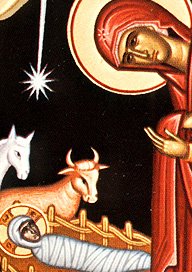
In many ways the Gospel text for Christmas Day (John 1:1-14) is a very heavenly and spiritual text. It may be hard to relate to on Christmas Day when we have the more earthly images of mangers and donkeys and shepherds, and mothers and new born babies in mind. Instead here we have the cosmic Word who was in the beginning with God and through whom all things are made. We have the One who was the life and the light of the world. We have the glory of the One and Only – the “only begotten” to use the older language - who came from the Father full of grace and truth. There is none of the historical concreteness that we find in Luke and Matthew with their record of governors and procurators, and a census, and a pregnant teenager bride, and a worried husband, and a journey, and a star, and inns with no rooms. Instead, John begins “in the beginning” – not just in the beginning of his story, but in the very beginning – before time began – in eternity. And yet this is the very point of Christmas – that the eternal has touched the temporal – that the heavenly and the earthly have been joined – that God has been contracted to fit into a cradle. What we need is eyes to see that the extraordinary is to be found in the ordinary.

U. A. Fanthorpe, the first woman ever to be nominated as Professor of Poetry at Oxford University, penned the following poem, called “B.C:A.D.”

This was the moment when Before
Turned into After, and the future's
Uninvented timekeepers presented arms.

This was the moment when nothing
Happened. Only dull peace
Sprawled boringly over the earth.

This was the moment when even energetic Romans
Could find nothing better to do
Than counting heads in remote provinces.

And this was the moment
When a few farm workers and three
Members of an obscure Persian sect
Walked haphazard by starlight straight
Into the kingdom of heaven.


Some people have criticised the City of Melbourne’s nativity photographs this year. The Melbourne City Council has set up a manger scene and you can have members of your family photographed as Joseph and Mary, or a shepherd or a wise man, or even the baby Jesus. It’s a kind of religious alternative, I guess, to having your photo taken with Santa Claus. Some people don’t like this because it seems to them to be a little tacky, or even sacrilegious. But I think there is something wonderful in people wanting to be identified with the Holy Family. Maybe some people shudder at the “kind” of people who might impersonate these saints and shepherds and wise men – shouldn’t they be particularly holy folks before they don the biblical robes of the nativity? I can only say “Bah Humbug!” to that. The baby Jesus did not grow up to be the kind of person who would only associate with “quality people” (whatever they are). He was the friend of sinners who touched the lives of ordinary people and made them extraordinary. Maybe some of these will end up, like the three visitors from the East, walking “haphazard by starlight straight into the kingdom of heaven.”

The following prayer from the Church of Scotland illustrates this well:

Today O God
the soles of your feet
have touched the earth.
Today,
the back street, the forgotten place
have been lit up with significance.
Today,
the households of earth
welcome the King of heaven.
For you are one of us.
So may our songs rise to surround your throne
as our knees bend to salute your cradle.


Tuesday, December 20, 2005

Baptisms at Balwyn

Brothers, Simon (left) and Daniel Gor (below) were baptised on Thursday 8 December at Balwyn Wesleyan Methodist Church. They are the sons of the late Rev. Dr. Andrew Gor, and Helen Gor, former OMS missionaries to Hungary. It was a privilege to officiate at the service. Part of the liturgy read as follows: "Eternal Father, when nothing existed but chaos you swept over the dark waters and brought forth light. In the days of Noah you saved those on the ark through water. You brought your people out of bondage in Egypt through the sea and across the waters of Jordan into the land you promised them. In the fullness of time you sent your Son, nurtured in the water of a womb. He was baptized by John and anointed by your Spirit. He called his disciples to share in the baptism of his death and resurrection and to make disciples of all nations. Pour out your Holy Spirit to bless this gift of water and those who receive it. Grant that they may know the forgiveness of sins and that greater baptism of the sanctifying Spirit which will cleanse them from all sin and fill their hearts with love for God and neighbour." After being immersed the following words were spoken over them: "Simon [Daniel] I sign you with the cross, the sign of Christ. Do not be ashamed to confess the faith of Christ crucified. Be strengthened by the Holy Spirit to fight valiantly under the banner of Christ against sin, the world, and the devil, and continue his faithful soldier and servant to the end of your life. May Almighty God deliver you from the powers of darkness, and lead you in the light and obedience of Christ. Amen."

We sang this Charles Wesley hymn "For the Baptism of a Believer" during the service:

Come Father, Son, and Holy Ghost
Honour the means ordained by thee!
Make good our apostolic boast,
And own thy glorious ministry.

We now your promised presence claim,
Sent to disciple all mankind,
Sent to baptize into your name,
We now your promised presence find.

Father, in [these] reveal your Son;
In [these] for whom we seek your face
The hidden mystery make known,
The inward, pure baptizing grace.

Jesus with us, you always are;
Effectuate now the sacred sign,
The gift unspeakable impart,
And bless the ordinance divine.

Eternal Spirit, descend from high,
Baptizer of our spirits thou!
The sacramental seal apply,
And witness with the water now!

O that the [ones] baptized therein
May now your truth and mercy feel,
May rise, and wash away [ther] sin –
Come, Holy Ghost, [their] pardon seal!

Remember your own baptism and be thankful!

AddThis

Share |